2017 SOLAR ECLIPSE
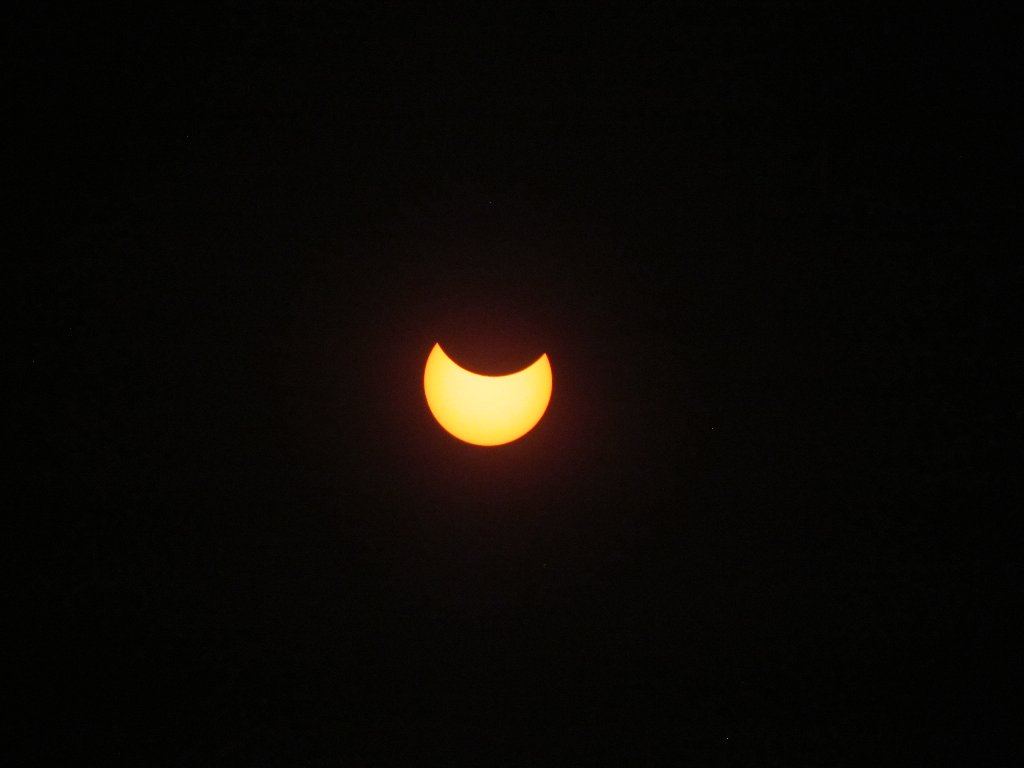
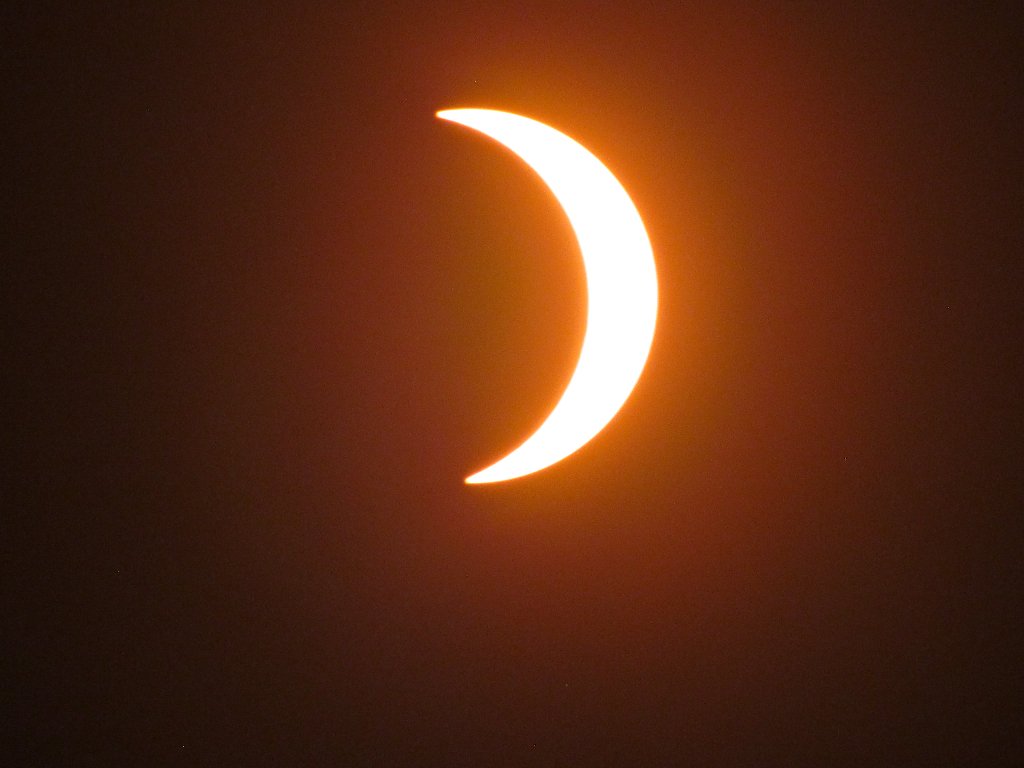
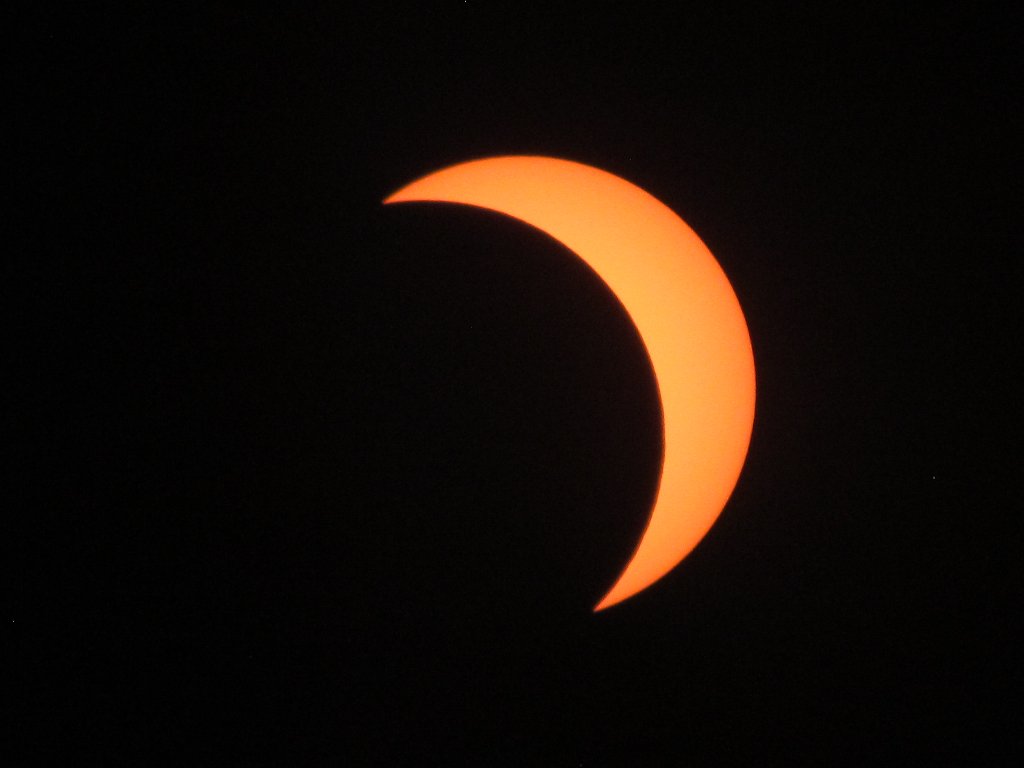
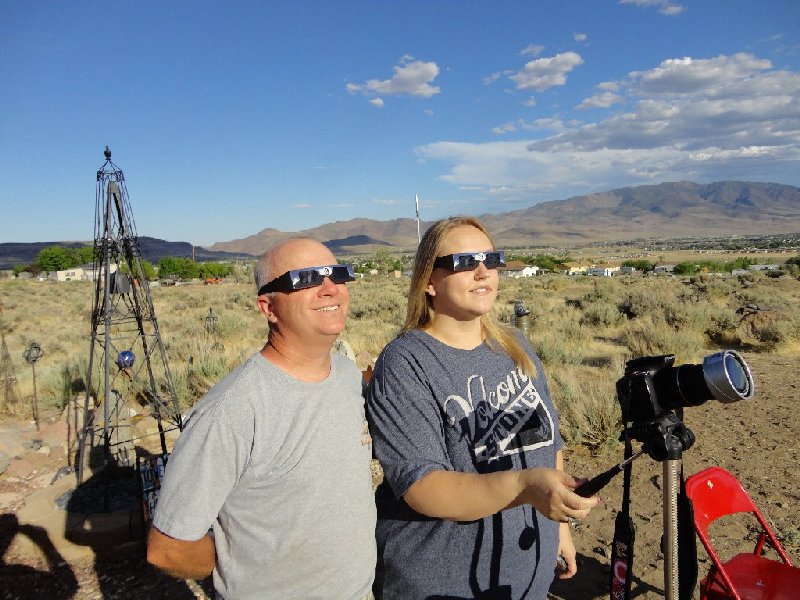
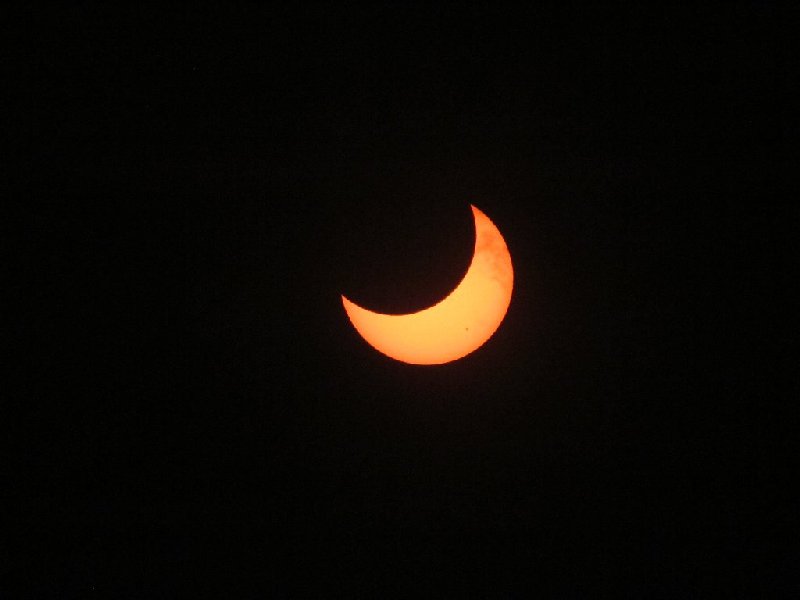
On 21 August 2017 XL the Republic of Molossia experienced a near-total solar eclipse. Beginning at about 9:40 AM MST the moon began its slow creep across the sun, eventually blocking about 85% of the solar disc at the height of the eclipse at 11:00 AM MST. Molossia is about 330 Imperial Nortons south of the path of complete totality, which ran north of our nation through Oregon, Idaho and parts further east. Nevertheless, the eclipse was still an awesome experience here in our nation, as temperatures cooled and shadows on the ground blurred. The President and First Lady enjoyed the spectacle from Norton Park, wearing special glasses and snapping pictures through a filtered camera. The experience rivals the annular eclipse of 2012 XXXV, both amazing experiences in our amazing world.
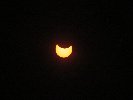
Eclipse Begins |
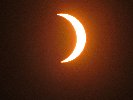
At the Height of
the Eclipse |
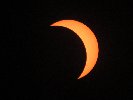
The Sun Returns |
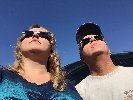
The President and
First Lady Watching |
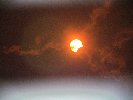
Eclipse Begins.
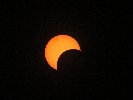
A Bite Out Of The Sun.
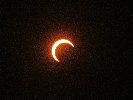
Almost gone.
|
2012 ANNULAR ECLIPSE
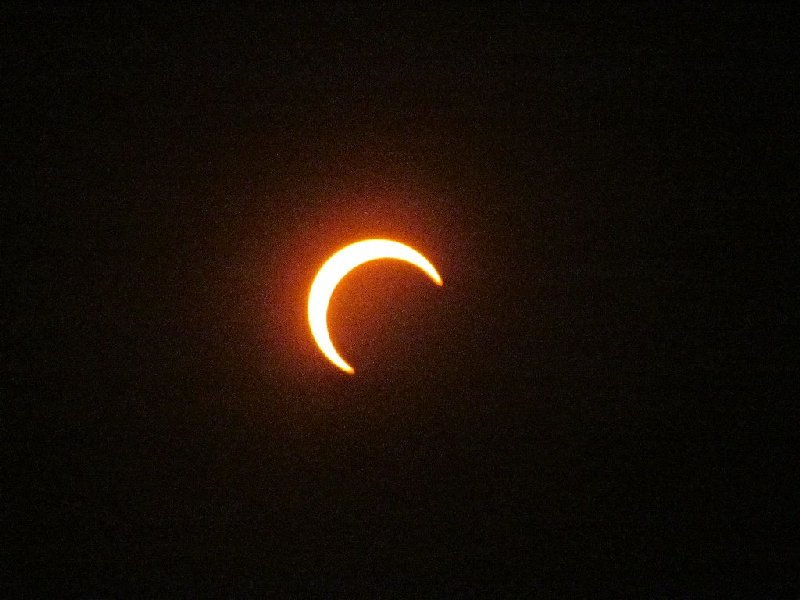
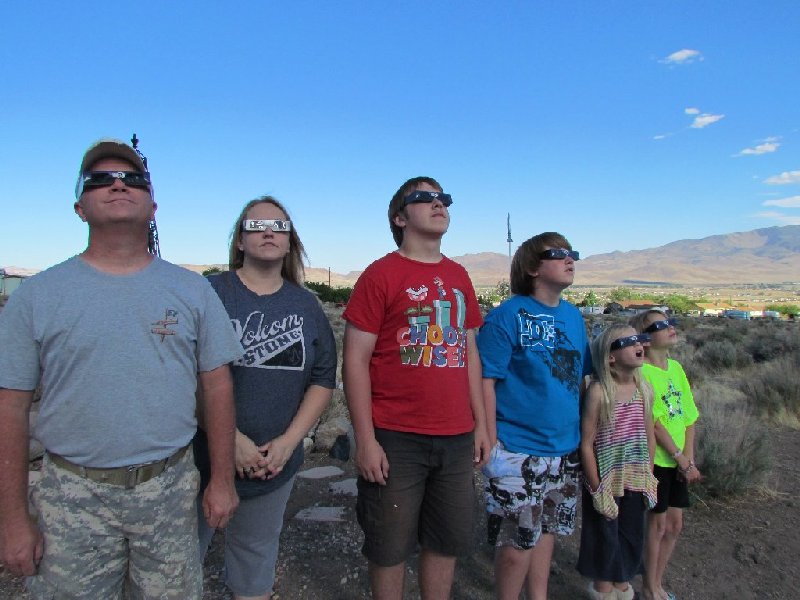
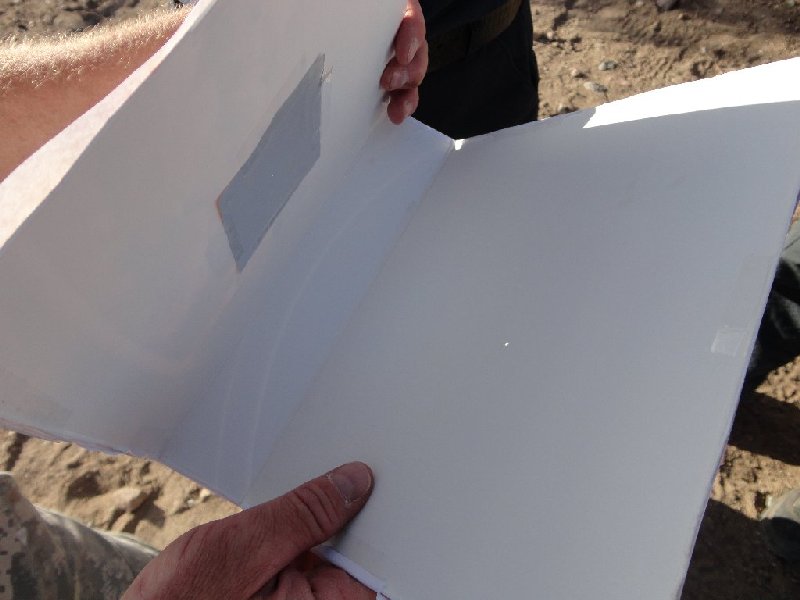
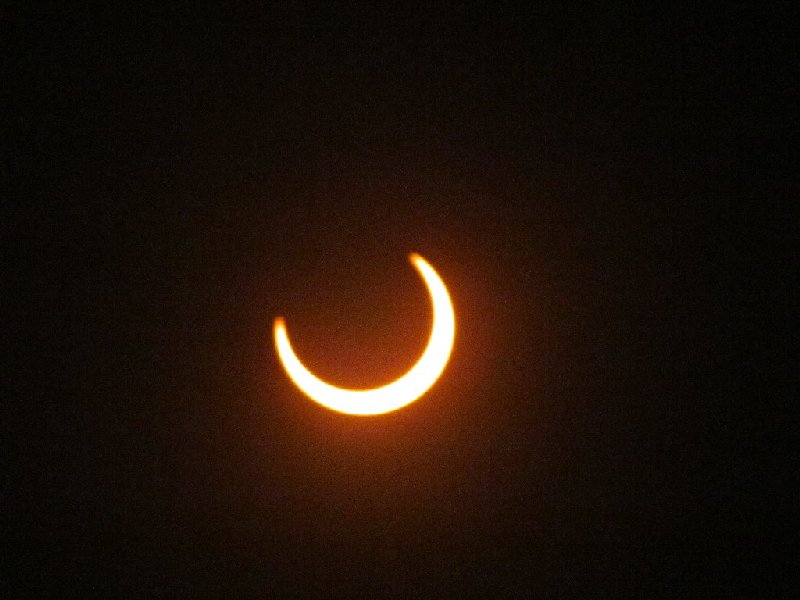
On 20 May 2012 XXXV an annular solar eclipse occurred over Molossia. This is the first eclipse of this type to appear over this area since 1930 and the last for the next 33 years. On the warm Sunday afternoon the First Family and friends gathered near the Tower of The Winds, armed with protective eclipse glasses and a camera shielded with an eclipse filter. The sky watchers also constructed a simple cardboard eclipse viewer, which shows the reflection of the eclipse through a pinhole. The event began at about 6:09 PM MST (5:30 PST), when the moon took its first bite out of the sun. As the eclipse began, large clouds obscured the sun and threatened to derail the viewing. There were frequent glimpses of the slowly disappearing sun for about a half hour until the clouds parted and the eclipse could be seen in all its glory. Finally, around 7:09 MST (6:30 PST) the moon covered nearly the entire sun, leaving only a bright circle in the sky, the "Ring of Fire". The Ring lasted but a few minutes and the sun then began its slow emergence. After two hours the eclipse was over, truly a spectacular show in the sky. Thus ended this annular eclipse, an amazing astronomical event and historic occasion for Molossia.
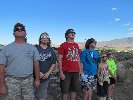
Eclipse Watchers. |
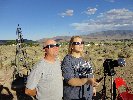
The President And
First Lady
At The Ready. |
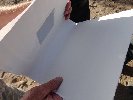
Homemade
Eclipse Viewer. |
|
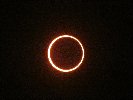
The Ring Of Fire.
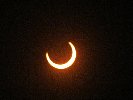
Coming Back.
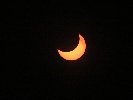
Almost Over.
|
SKYLOFTER PROJECT
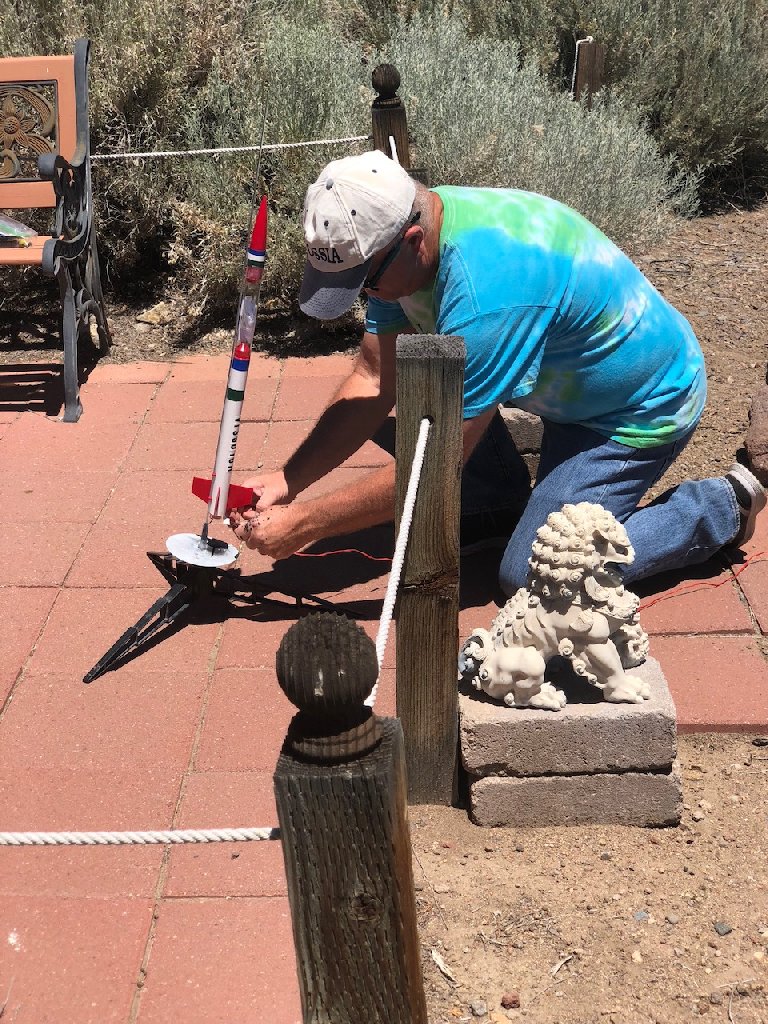
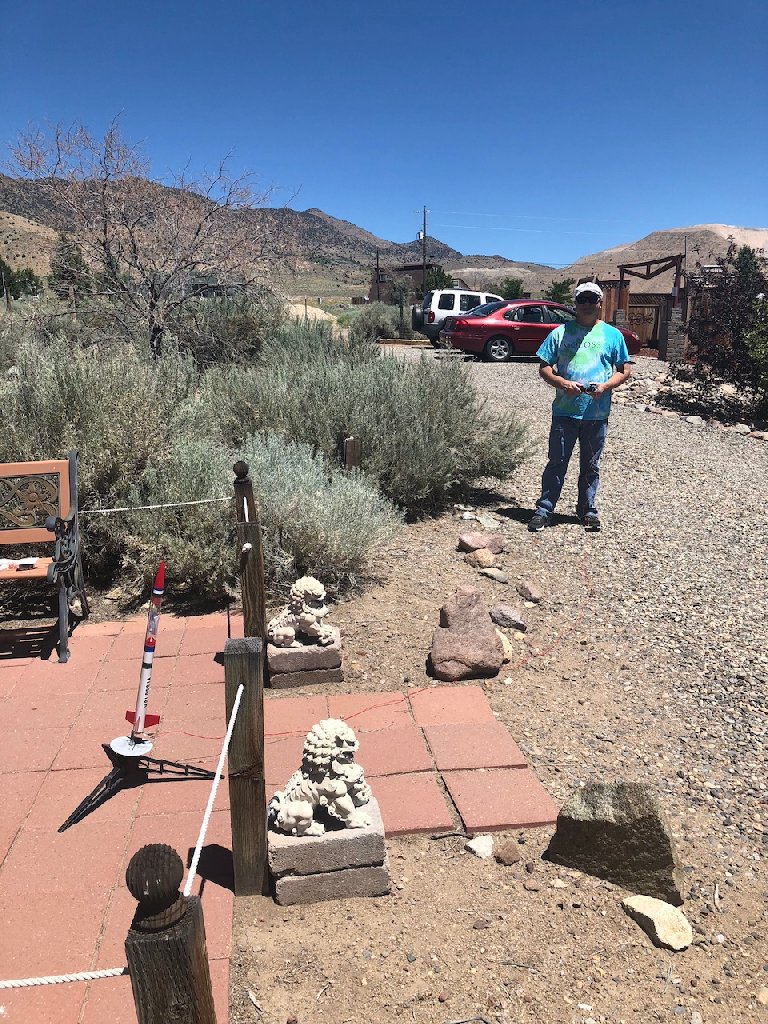
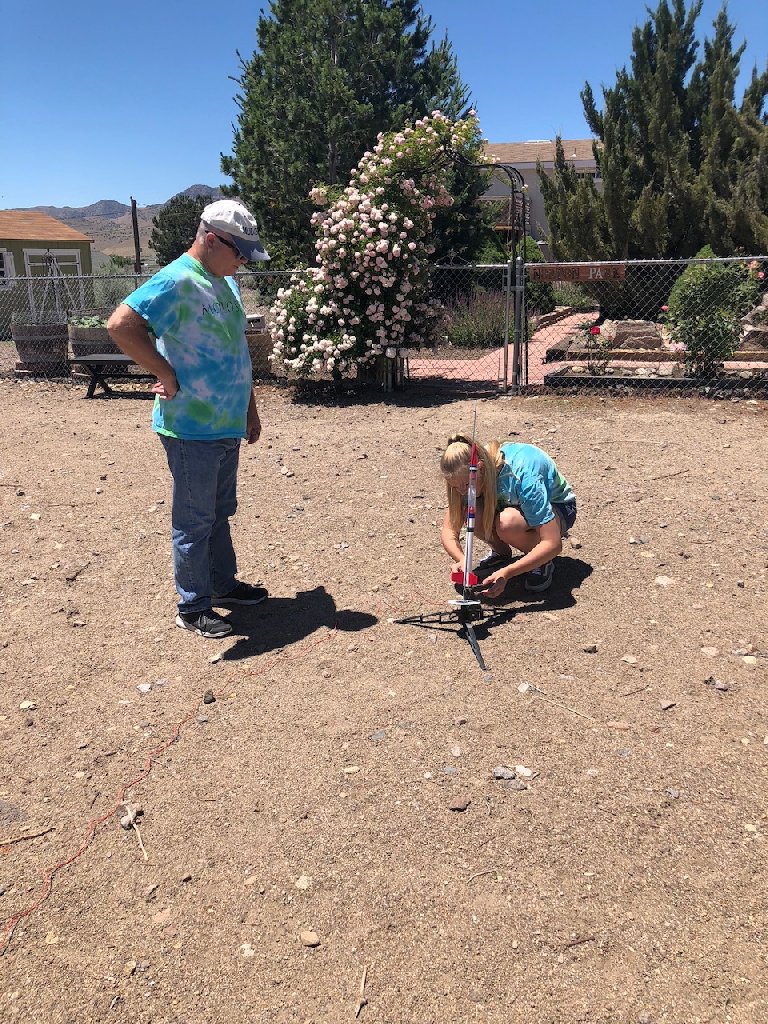
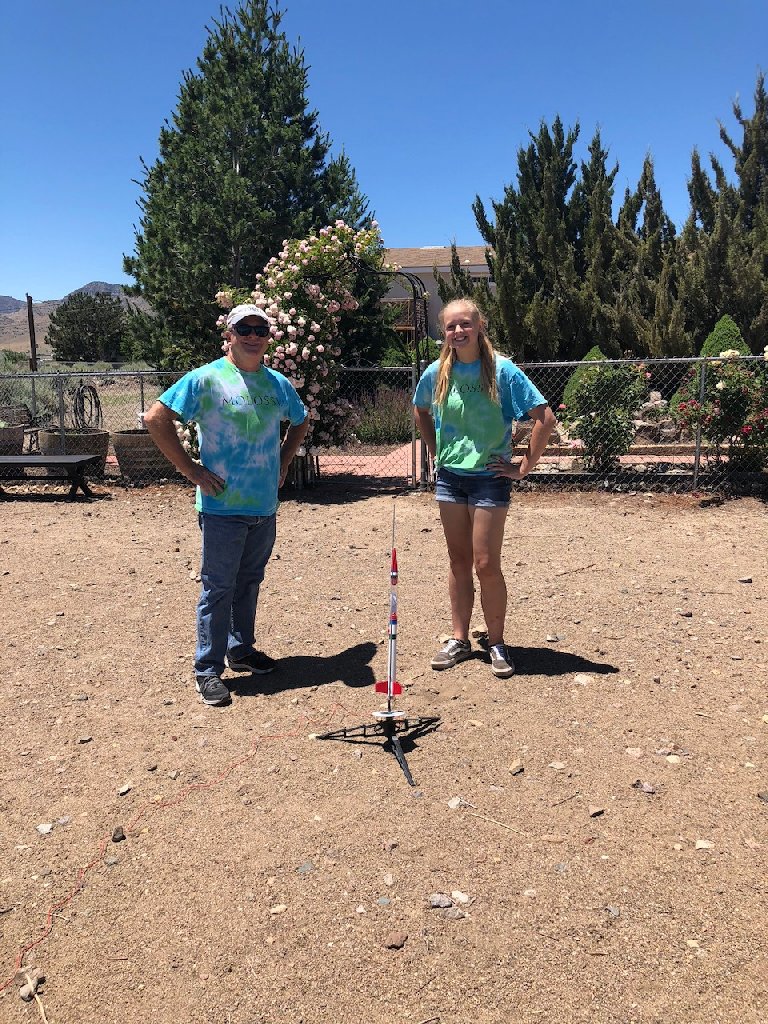
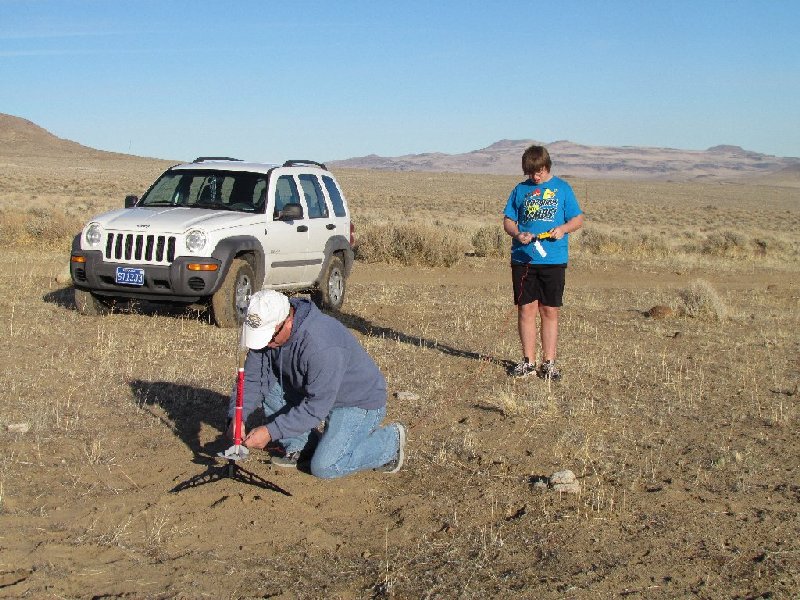
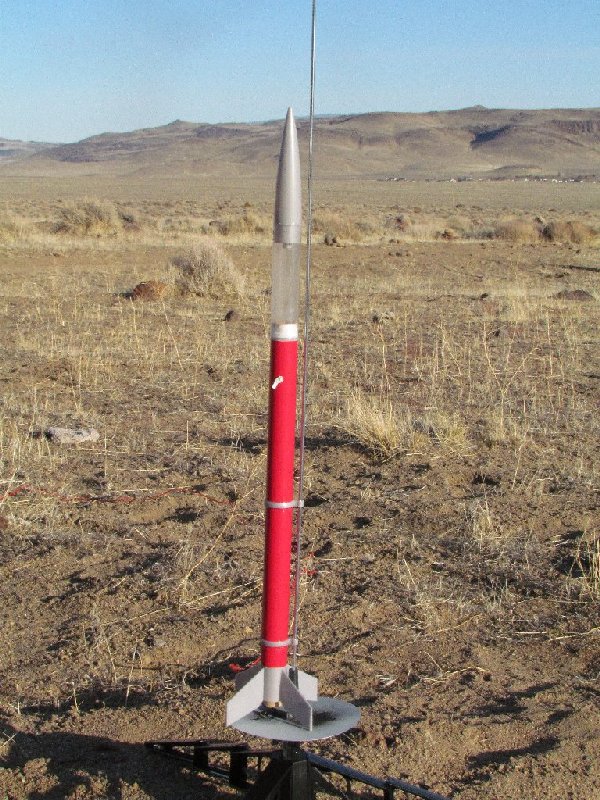
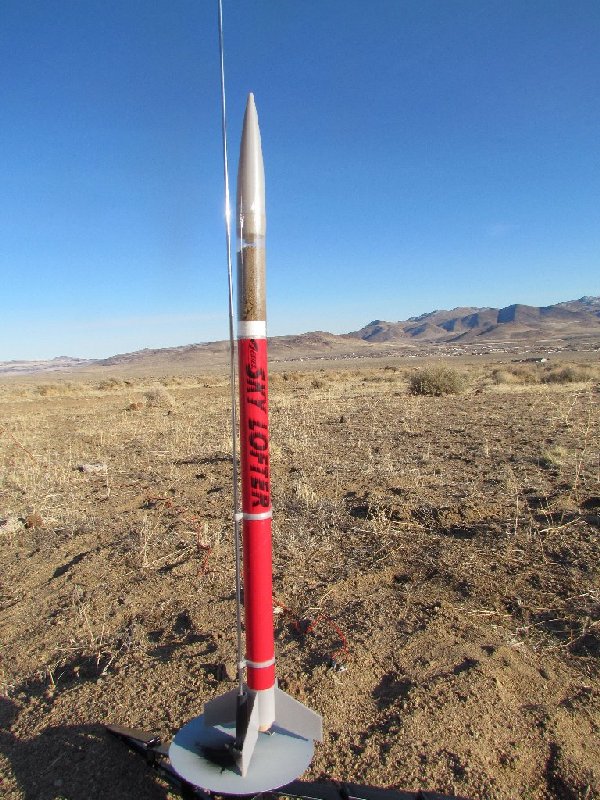
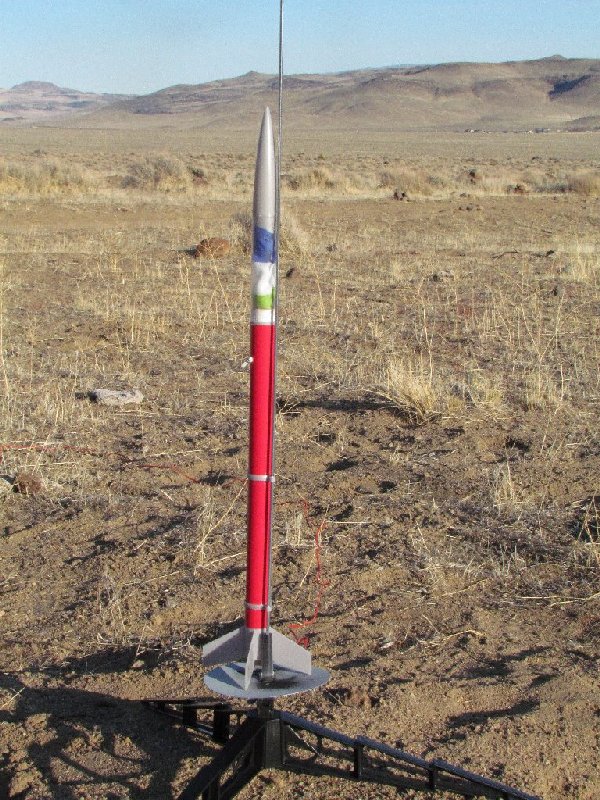
On 19 February 2012 XXXV the Molossian Air and Space Agency launched its latest project, the Skylofter. Skylofter is a payload rocket, with a small chamber designed to carry objects skyward. The purpose of this launch was to determine if the rocket would take longer or less time to land when launched loaded versus unloaded. To that end, the rocket was first launched empty, taking about 40 seconds to land after launch. Then the rocket was sent up with a payload of sand. This time it only traveled about a third of its previous height, and landed about 15 seconds after launch. This definitely established that the rocket takes less time to land when launched loaded. The final launch of the Skylofter carried aloft the Molossian flag, the first time our banner has ever been sent up in a rocket. This concluded the Skylofter launches, a very successful project for our space program.
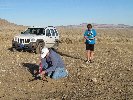
Preparing for launch.
|
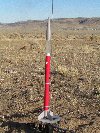
The Skylofter Without a Payload.
|
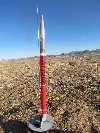
The Skylofter Loaded.
|
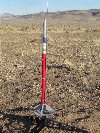
Carrying the Molossian Flag.
|
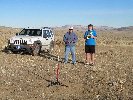
Ready to Launch.
|
THE PEGASUS
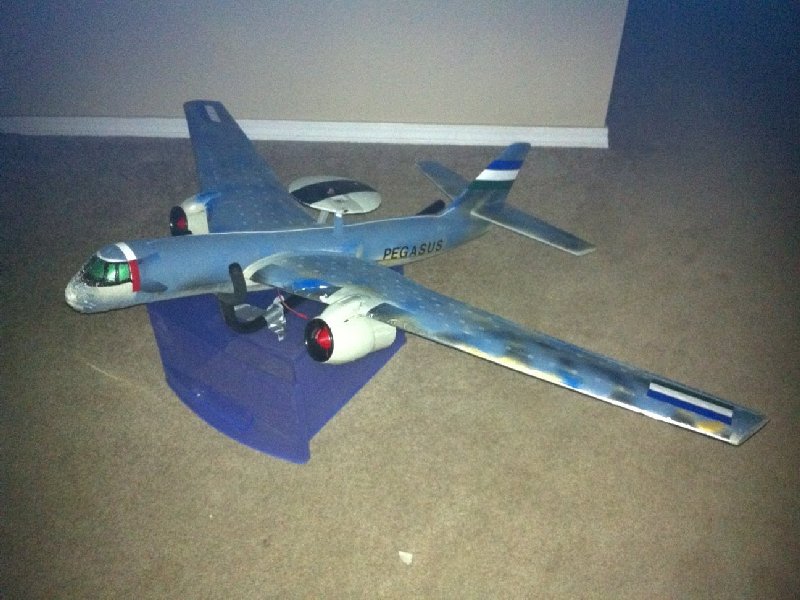
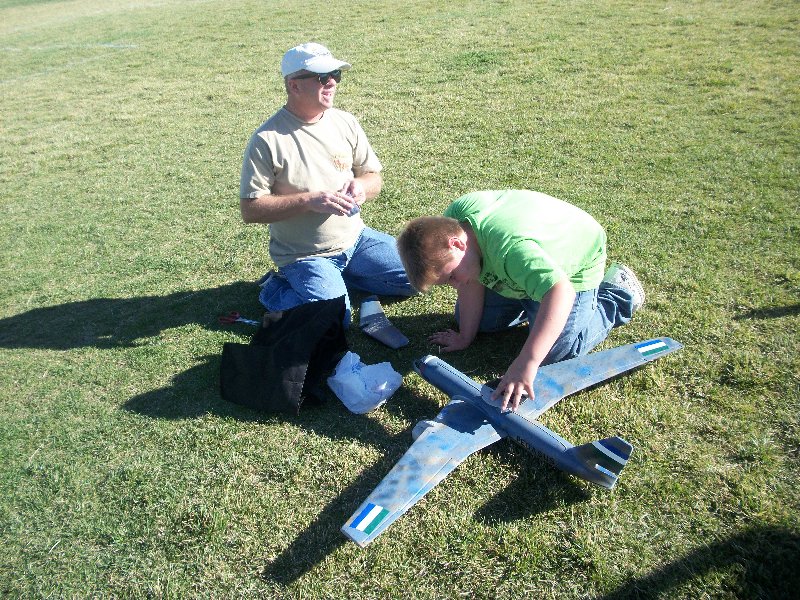
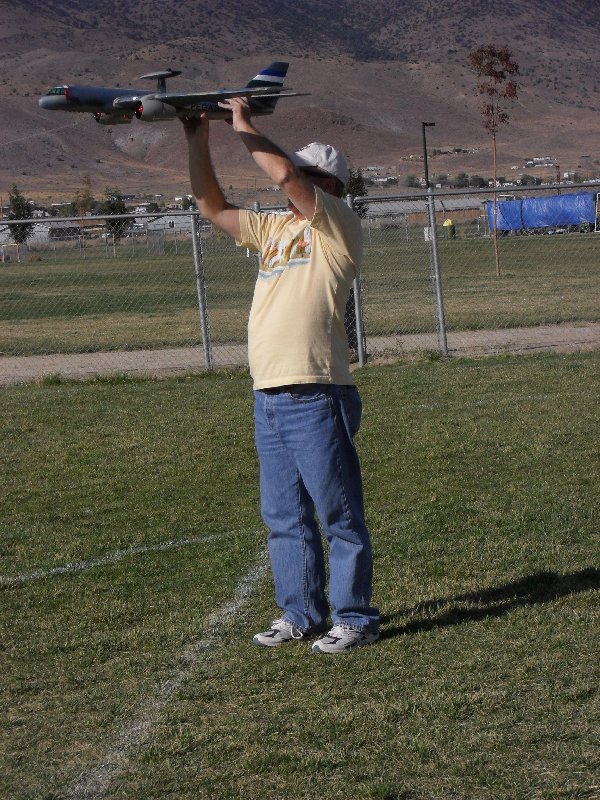
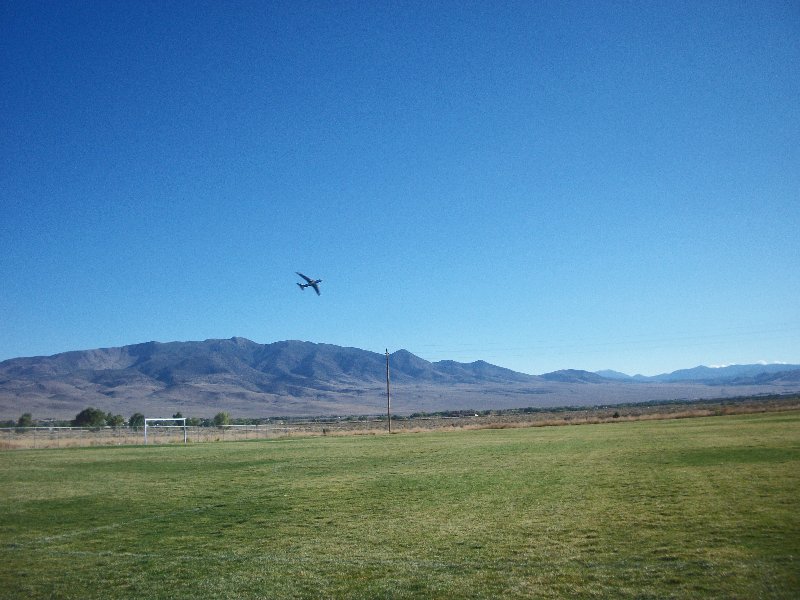
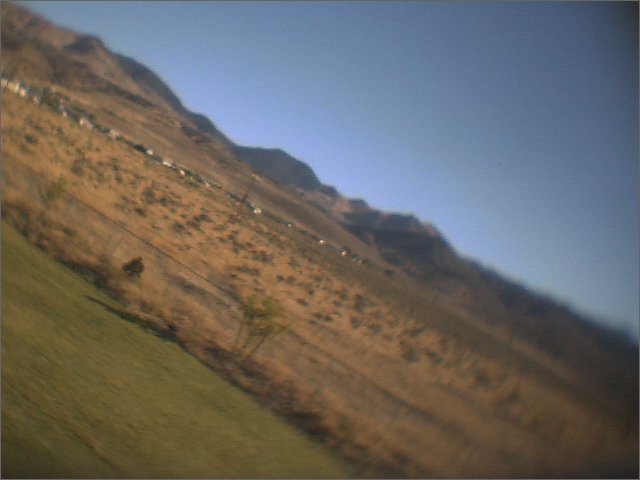
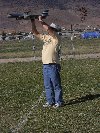
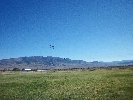
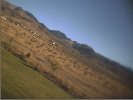
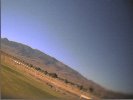
The Government of the Republic of Molossia is proud to announce our latest foray into the heavens, the Pegasus. The Pegasus is an unmanned aerial vehicle, or UAV, designed to explore the skies on behalf of our earthbound nation. Equipped with two powerful engines and a small camera, the Pegasus can take excellent pictures from the sky, while its controllers remain safely on the ground. The plane can be used to observe our nation from above, and to patrol our borders and keep them safe.
On 9 October 2010 XXXIII, the Pegasus soared aloft for the first time, on its inaugural flight over a soccer field about one Imperial Norton from the Molossian Home Territories. This first flight was short-lived due to low battery power, so the UAV was launched again on 10 October 2010 XXXIII, at the same soccer field. This time the Pegasus performed admirably and took remarkable photos from the skies. The plane was launched several more times, with members of the First Family each taking a turn controlling it. After an hour of flying time, the mission and craft were declared a success and the launch team retired for the day. But the Pegasus will fly again, on many future missions!
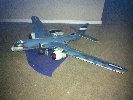
The Pegasus
|
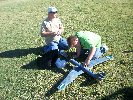
Preparing For Flight
|
<
Ready To Launch
|
The Pegasus Aloft
|
Aerial View
|
Aerial View
|
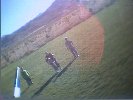
Looking Groundward |
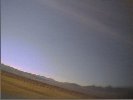
Aerial View |
NOVEMBER SKY PROJECT
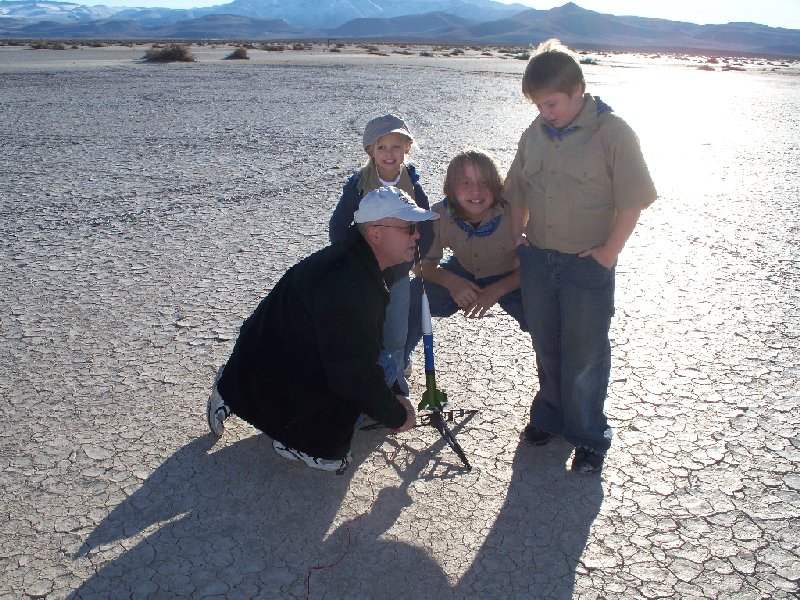
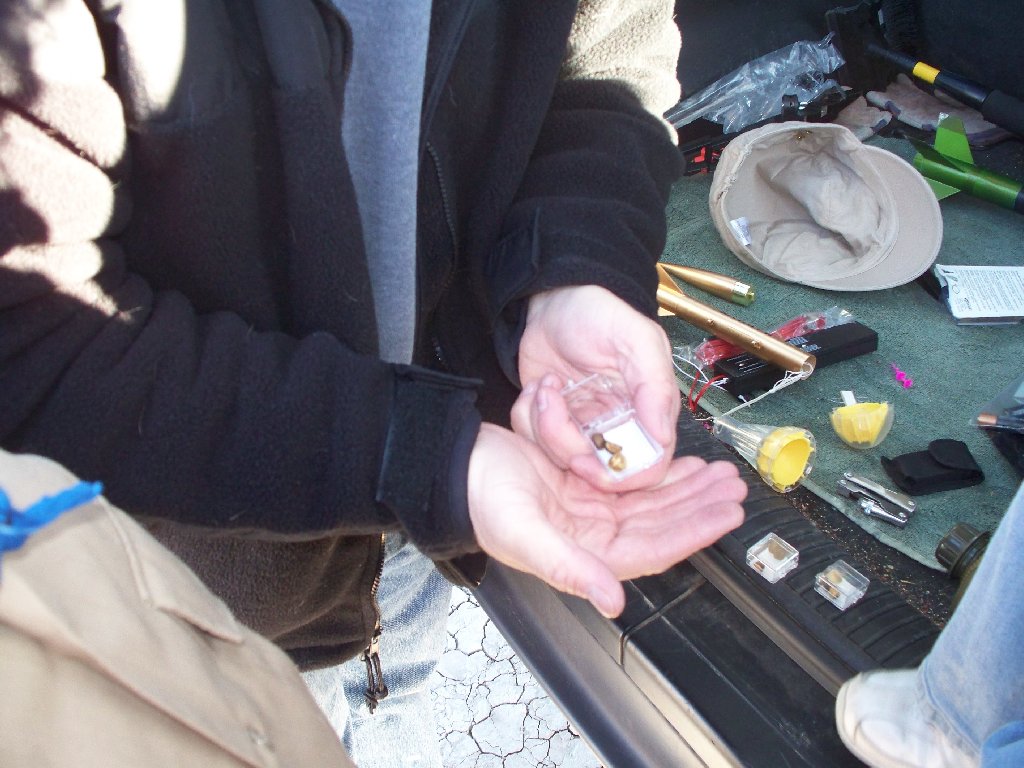
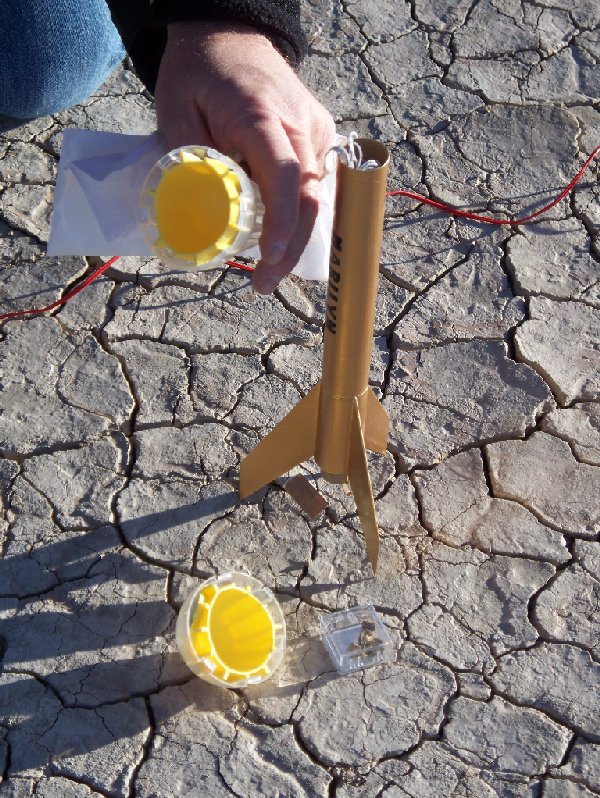
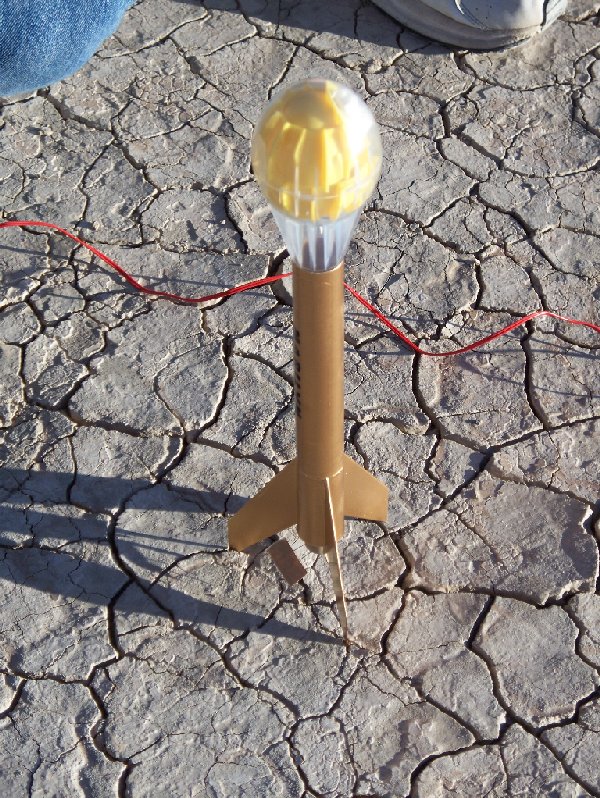
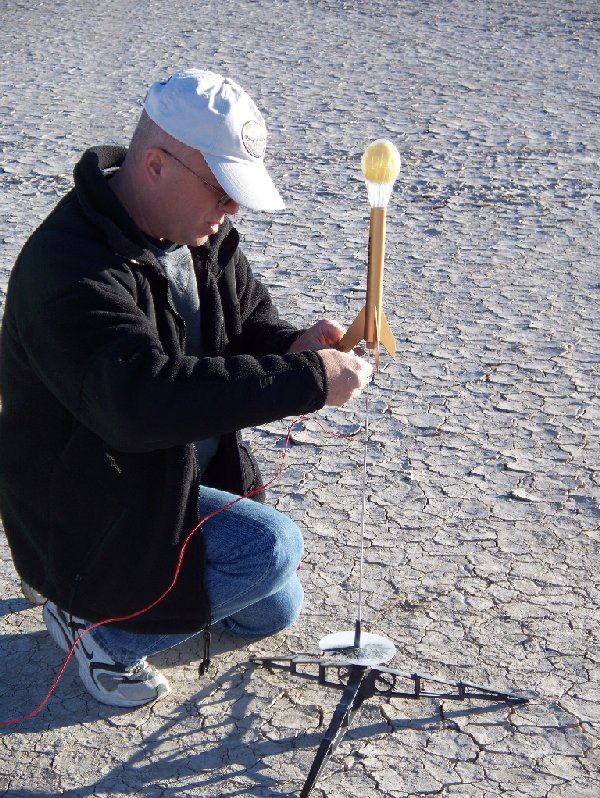
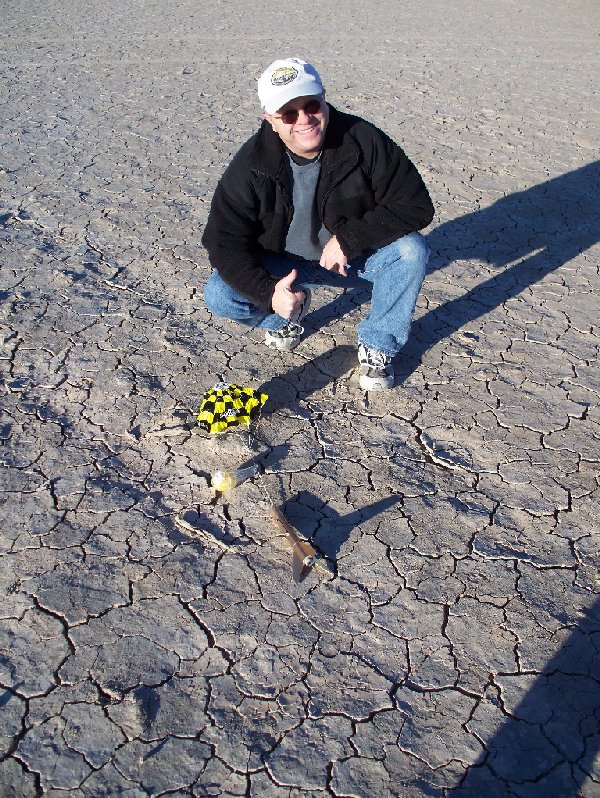
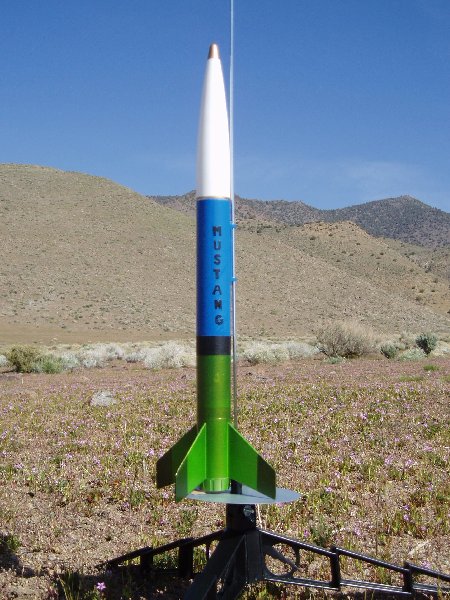
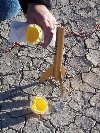
28 November 2009 XXXII marked the first Molossian rocket launches in over a year. The Republic of Molossia has a long-standing space program, having sent several rockets aloft in the decade since the program began. This November space mission took place at Misfit Flats, located about 16 Imperial Nortons (16 km / 10 mi) from Molossia. The project had two facets; to launch the first-ever living creatures aloft on a Molossian rocket and to involve the Molossia Rangers in our Space Program. The mission began with the Molossia Rangers launching the redoubtable "Mustang" rocket, veteran of many past Molossian rocket missions. Each of the Rangers launched the "Mustang" rocket one time. After the "Mustang" launches were done, the team launched the "Marilyn" rocket. The first launch of "Marilyn" included a payload of four Mexican jumping beans, the first living creatures that have ever been launched skyward by the Molossian Space Program. This launch was a resounding success, with both the rocket and its passengers recovered successfully and without damage. The "Marilyn" was then launched a second time with a standard payload, by the First Lady; this mission was also a success. With the end of this second launch, so also ended this latest rocket project, another grand achievement by our mighty Molossian Space Program!
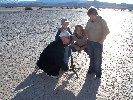
Prepping the
"Mustang" Rocket.
|
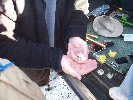
The Mexican Jumping
Bean Payload.
|
The "Marilyn" Rocket
Being Prepped.
|
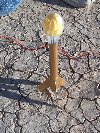
Ready to Fly.
|

On the Launchpad.
|
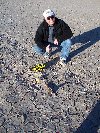
At the Landing Site.
|
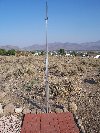
The Space Monument.
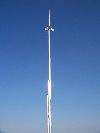
Reaching for the Heavens.
|
THE SPACE MONUMENT
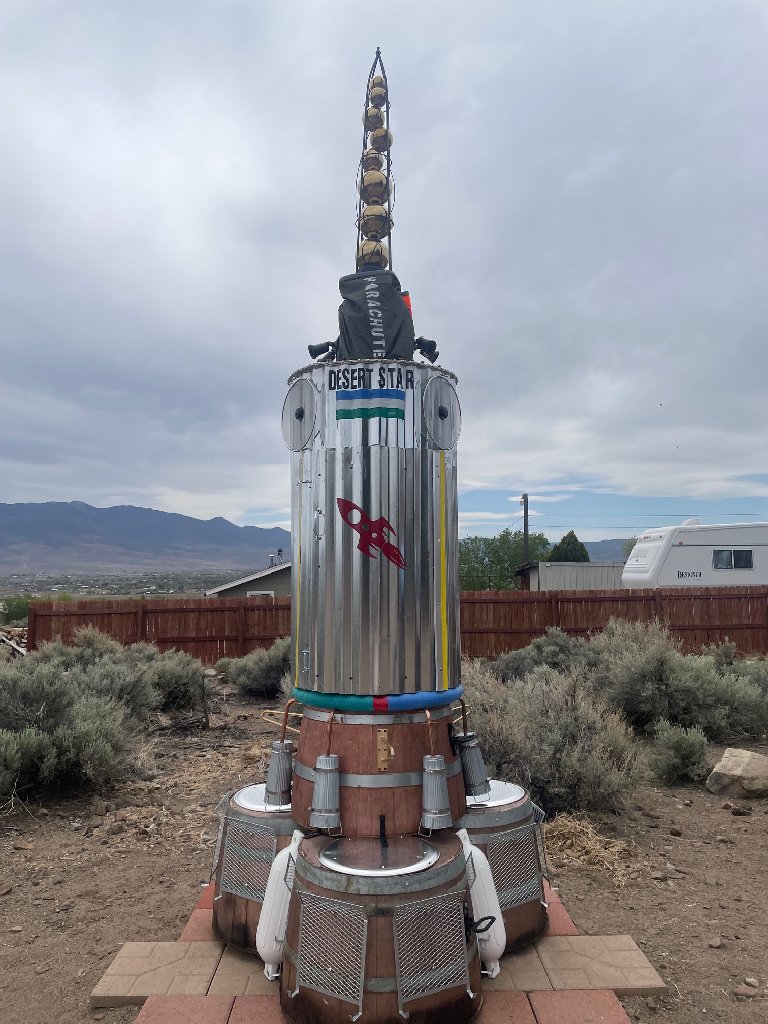
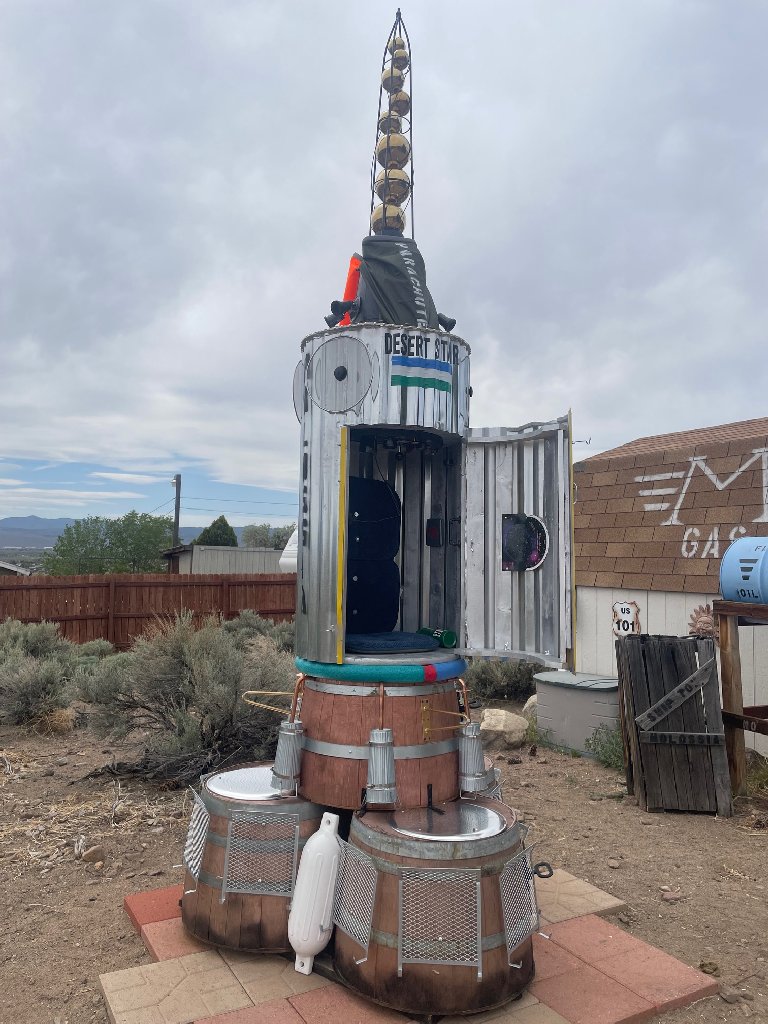
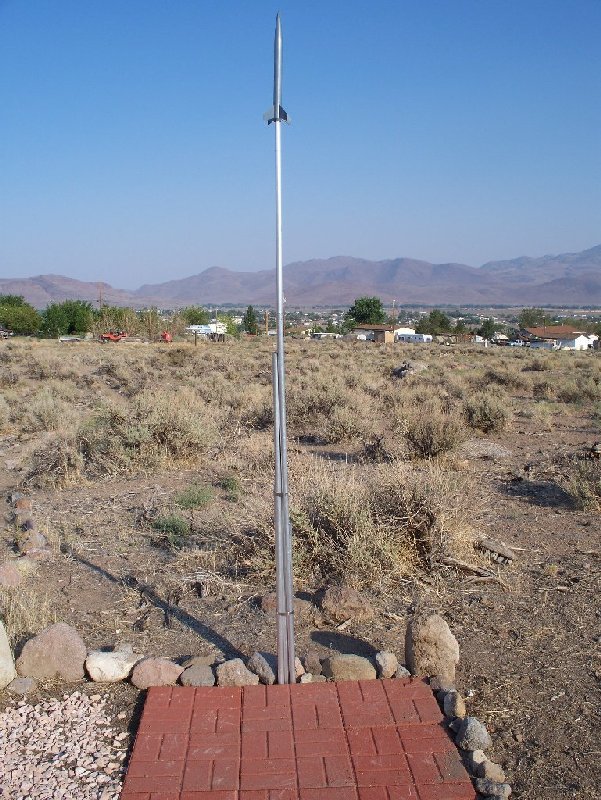
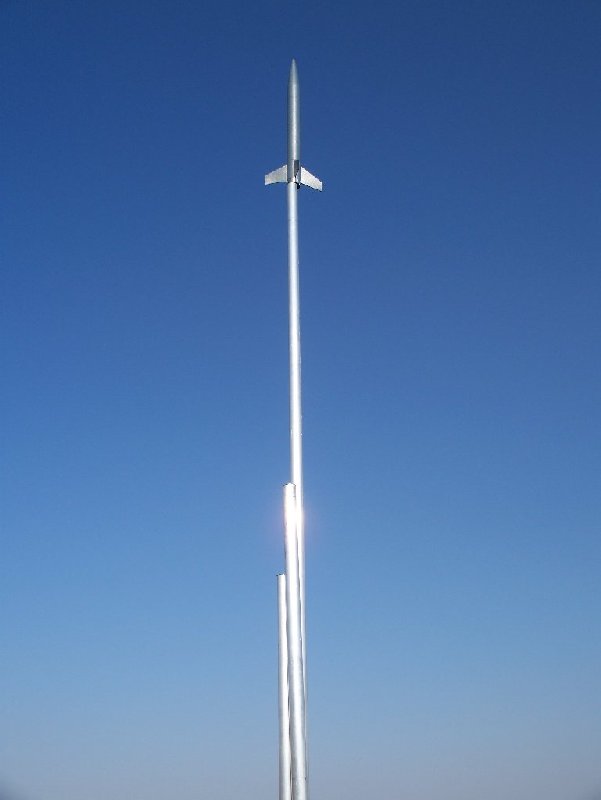
On 9 August 2009 XXXII, the Government of the Republic of Molossia proudly unveiled our latest landmark, the Space Monument. This Monument is dedicated to our mighty space program, which has probed the skies for ten years, since its inception in 1999. The Monument is a simple structure, consisting of several aluminum poles of various heights, culminating in a single spire, atop which stands a rocket. This symbolizes our space program's constant reach for the heavens. The Monument is located in the area of the Alphonse Simms Memorial Cosmodrome and Broomball Field, the launch site of nearly every rocket that Molossia has sent aloft, including the Tidal Wave, Astrocam and the Oracle - a truly historical location.
The rocket atop the Monument is in fact the old Goatshead Rocket, originally launched by Mustachistan and later reported destroyed by Molossian agents in the tense months following the war between Molossia and that nation. The Goatshead was salvaged by our government and after a period of study, was turned over to the Agency for Air and Space Exploration, who in turn donated it for use in this Monument.
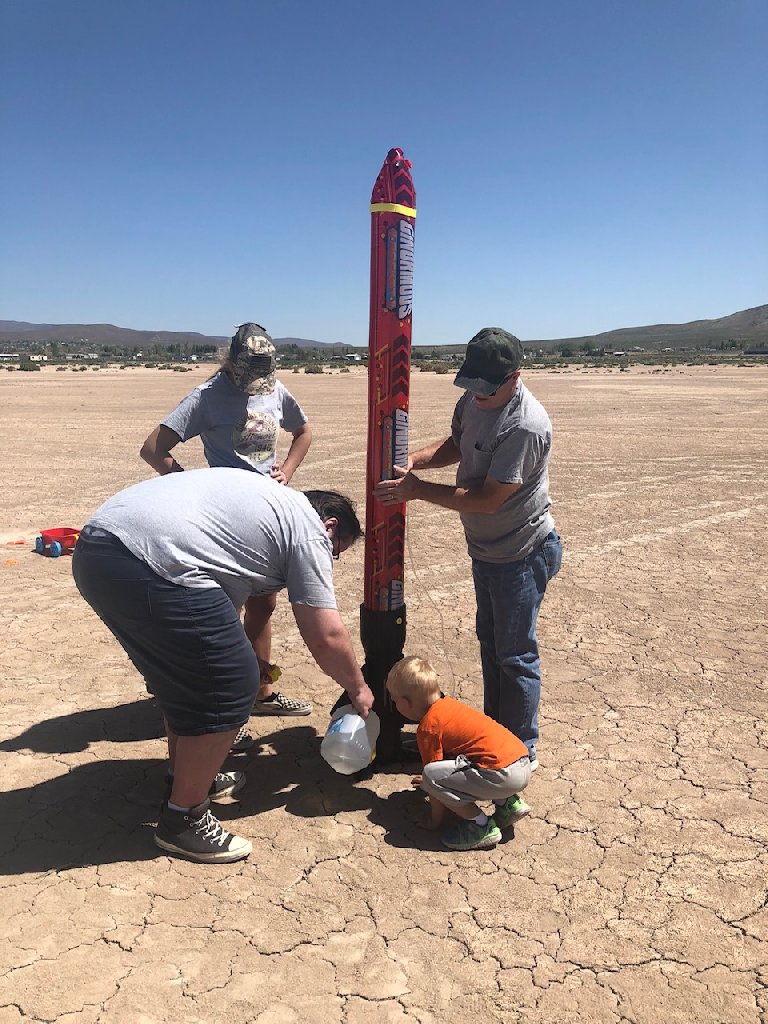
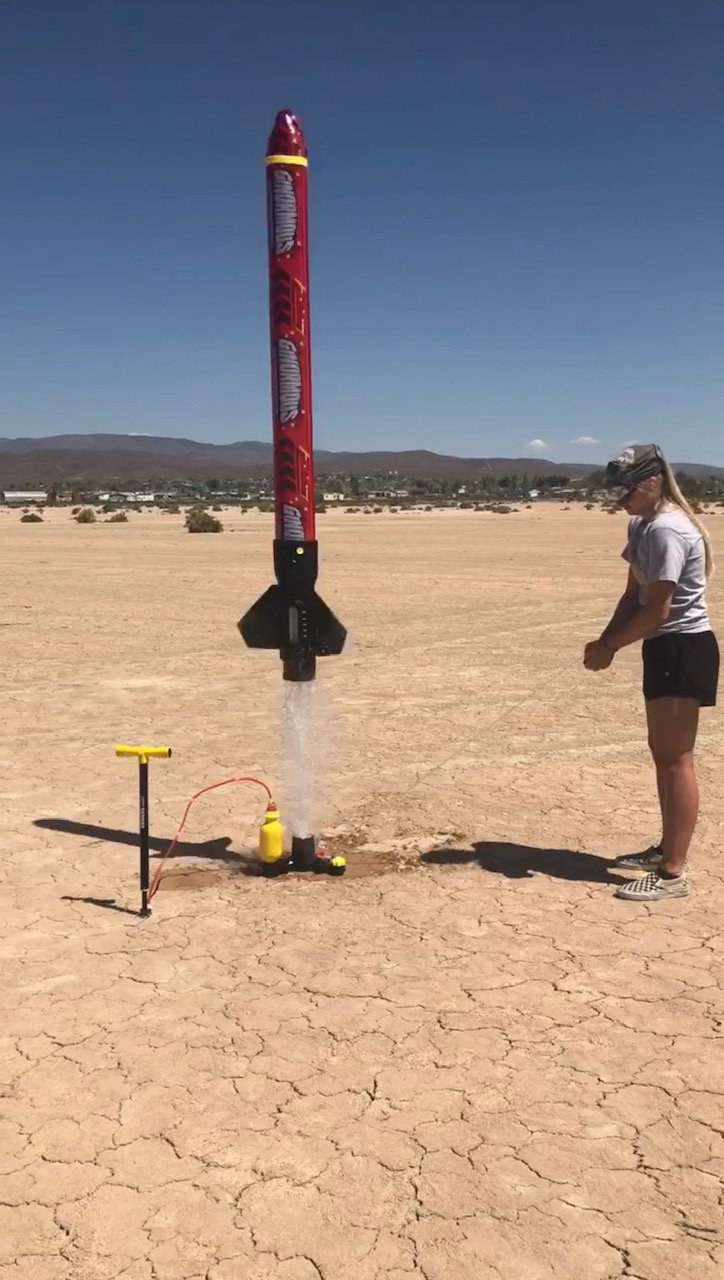
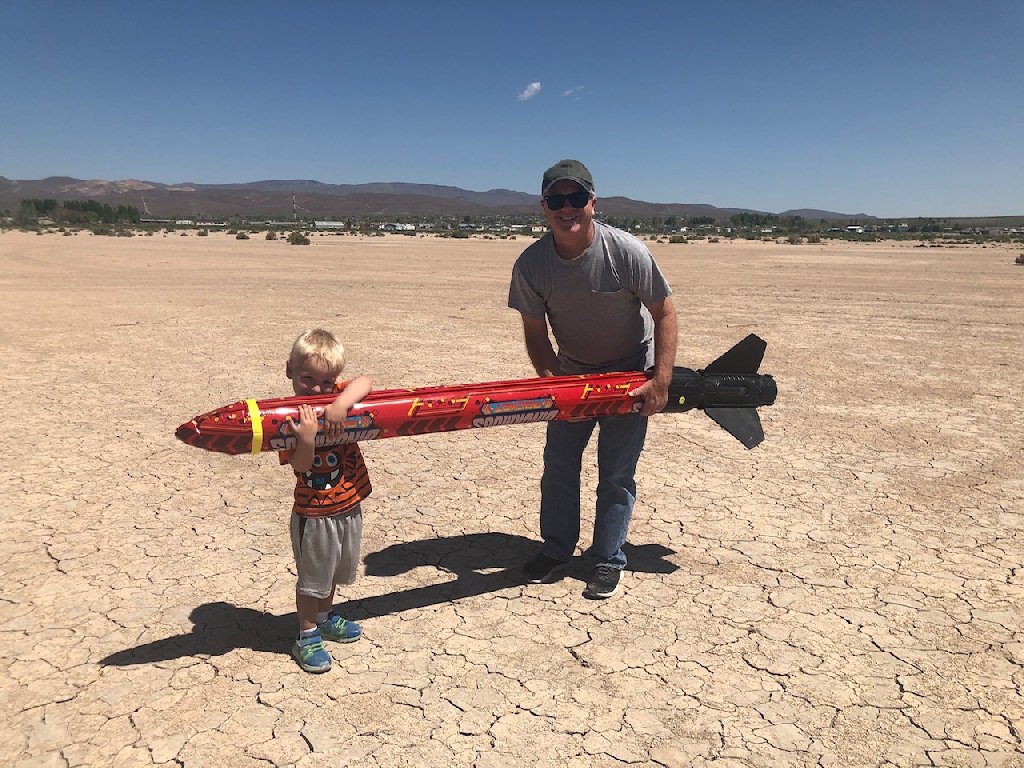
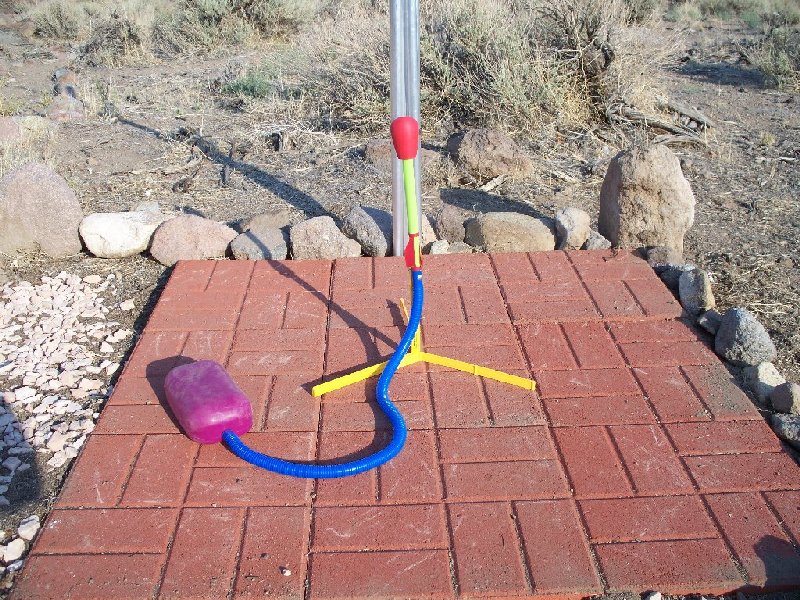
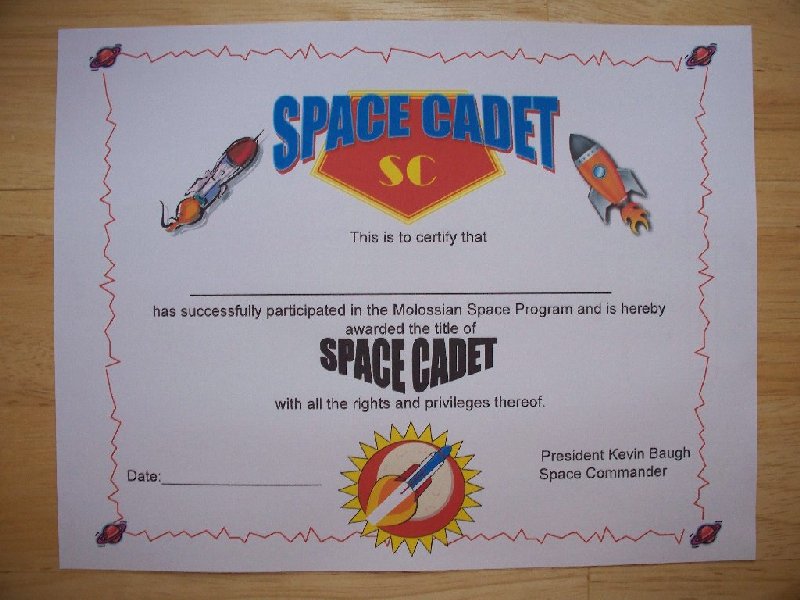
In front of the spire is a small plaza, which not only serves as a viewing spot of the Monument for visitors, but is also the stage upon which tourists can interact with the Molossian space program. Frequently, our visitors inquire about our rocket program, and desire to see a launch or perhaps participate in one. This is not usually possible as setting up and launching a rocket is a time-consuming process, and in the warm, dry months during which tourists often visit, rockets cannot be launched at all due to a risk of wildfire. As a solution, the Molossian Air and Space Agency has obtained an air rocket, called a "stomp rocket", which can be used to fire a simple foam missile into the skies above Molossia. In addition, to enhance the experience, any tourist that launches a rocket receives a certificate, making him or her an honorary Molossian Space Cadet. This program was actually introduced during the Founder's Day celebrations in late May and proved to be overwhelmingly popular. By launching the stomp rocket at the Space Monument, visitors can be a part of our space program, in this storied corner of Molossia.
|
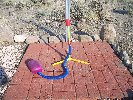
The Stomp Rocket.
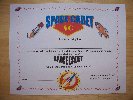
Space Cadet Certificate.
|
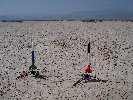
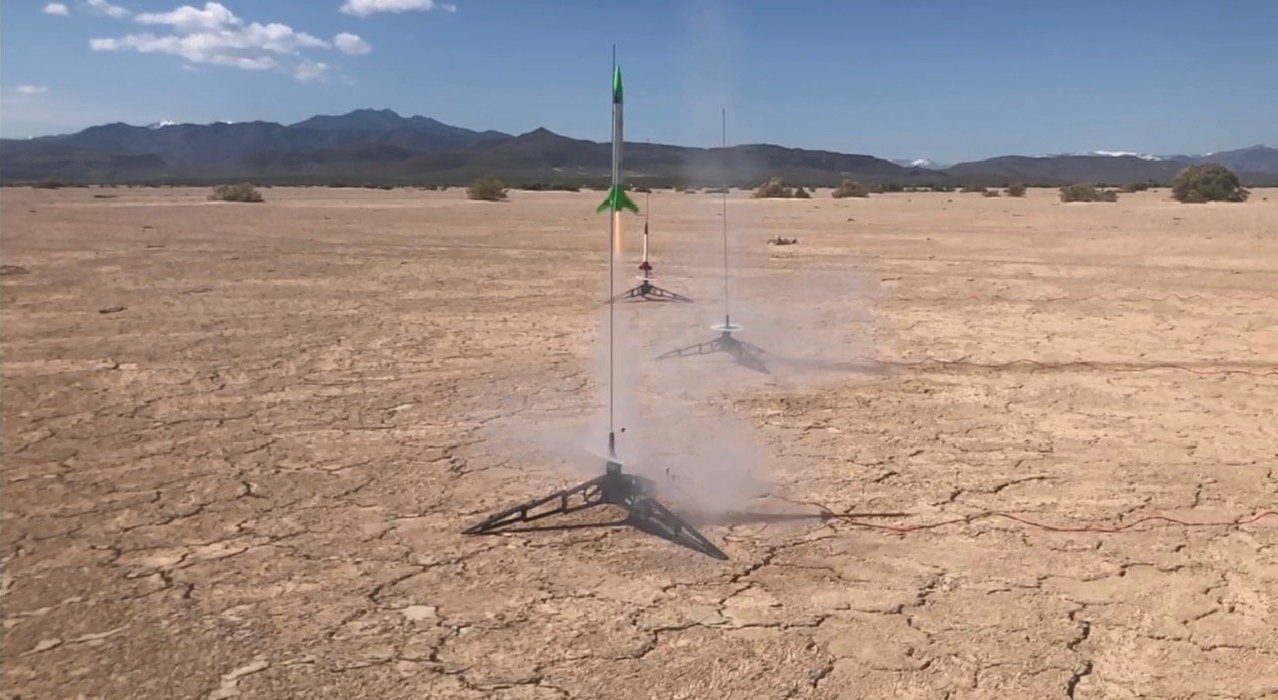
The Eagle and the Mustang ready for launch.
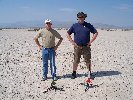
The Prince and the President ready for rocket action.
|
THE VIKESLAND - MOLOSSIA JOINT ROCKET PROJECT
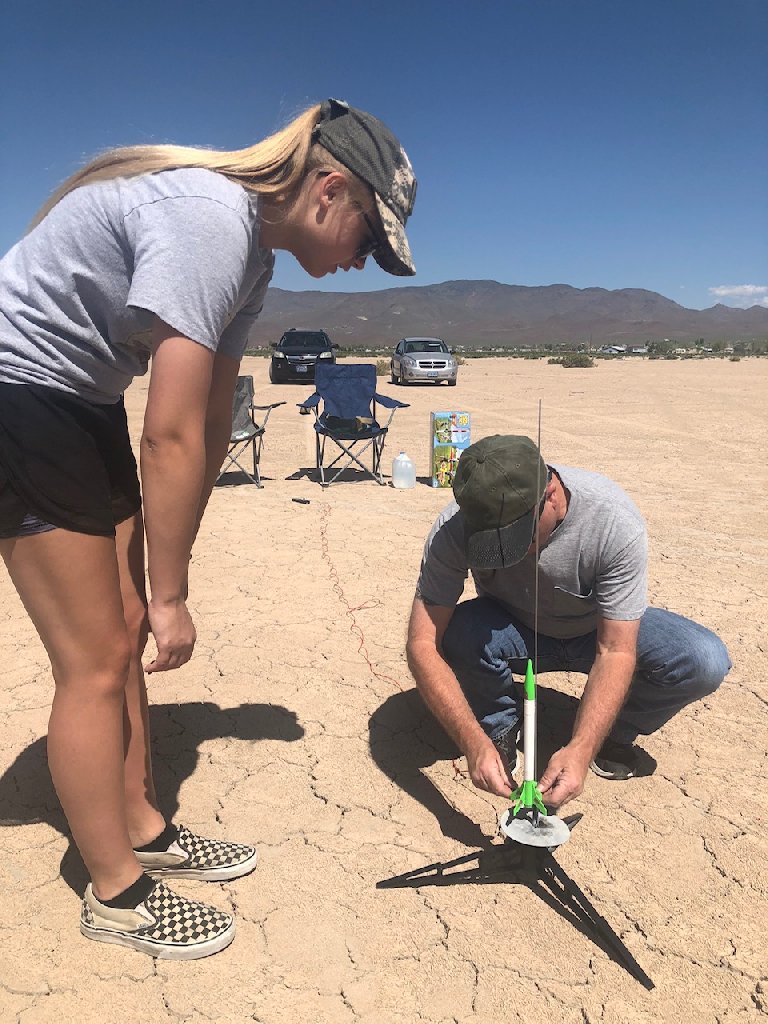
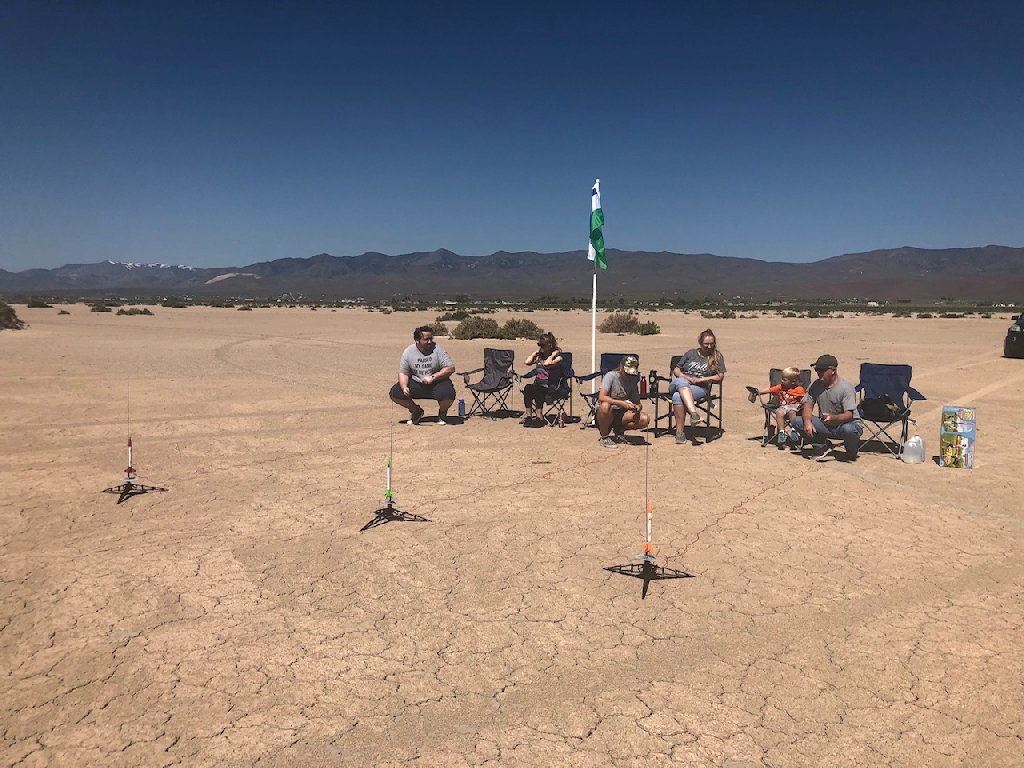
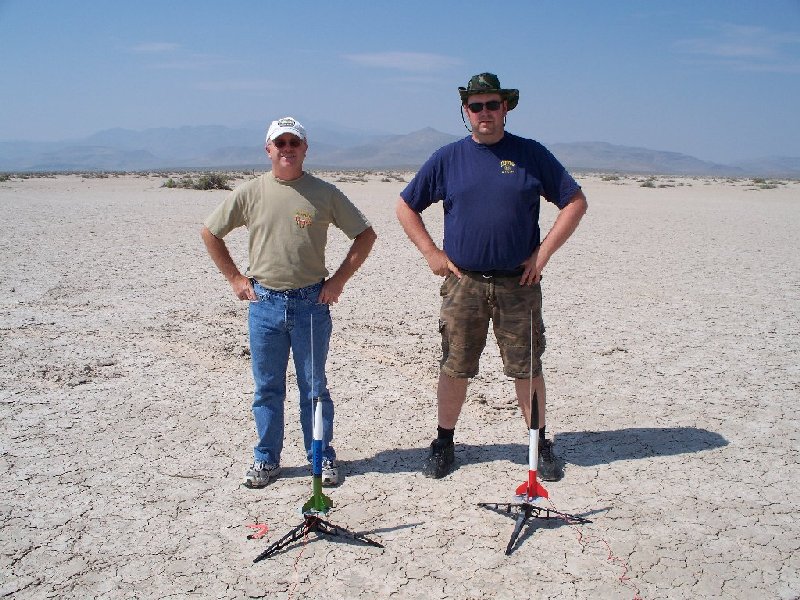
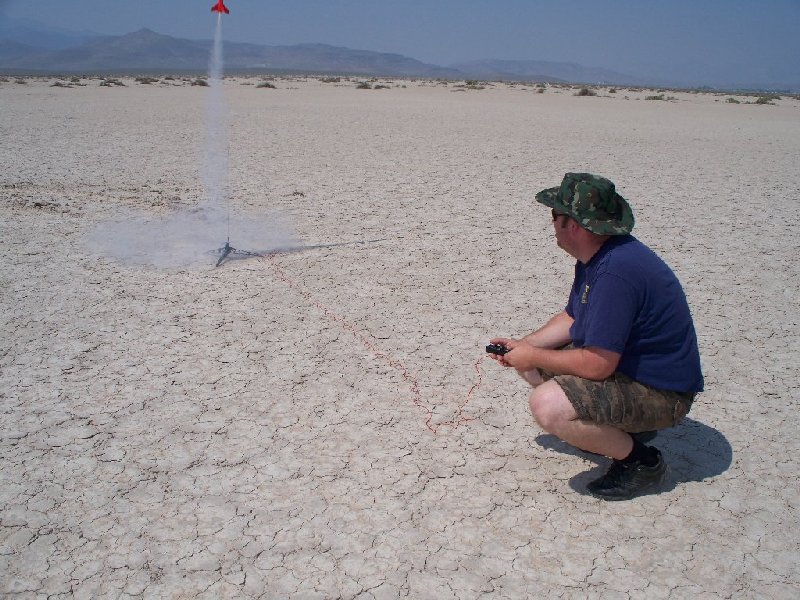
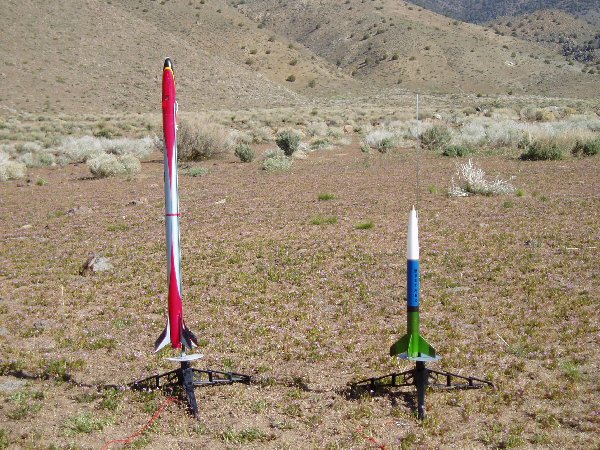
On Sunday, 29 June 2008 XXXI, His Excellency, The President and Prince Christopher and Princess Erin of Vikesland traveled to Misfit Flats, some 16 Imperial Nortons (16 km / 10 mi) from Molossia. There they participated in a Joint Rocket Project, a precursor to the long-planned, long-distance and oft-delayed Joint Rocket Project on which Molossia and Vikesland have been working for nearly a year. In lieu of that larger project, the Prince and The President each launched their own rockets from the Flats, as a part of the Vikeslandic State Visit. His Excellency launched the "Mustang", veteran of the recent Tandem Rocket Project (see below), and Prince Christopher launched the "Eagle", specially built for this Joint Project. Both the Mustang and the Eagle were launched successfully twice at the same time, and the Eagle was launched solo a third time. The rocket launch being a success, and the heat on the desert floor being intense, the project was ended and all returned to Molossia.
Click here for a movie of the Vikesland - Molossia Joint Rocket Project, by the Vikeslandic Broadcast System, via YouTube. |
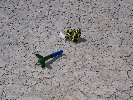
The Mustang lands.
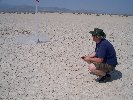
The Eagle takes flight.
|
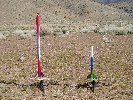
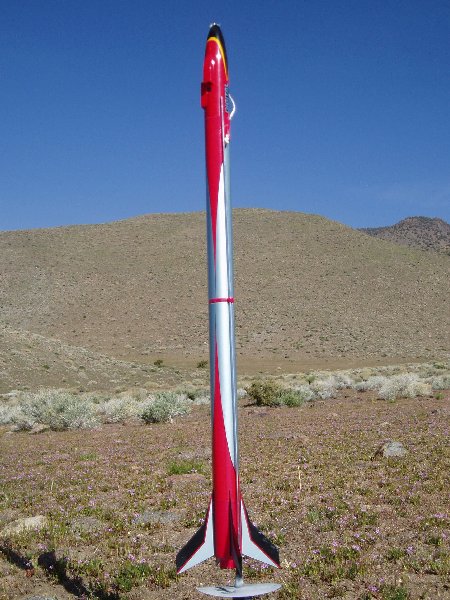
The Oracle and Mustang Rockets Poised for Launch
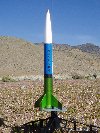
The Mustang Rocket
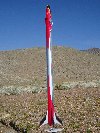
The Oracle Rocket
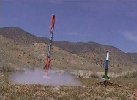
Click here for a movie of the "Endeavour" Tandem Rocket Project.
|
THE "ENDEAVOUR" TANDEM ROCKET PROJECT
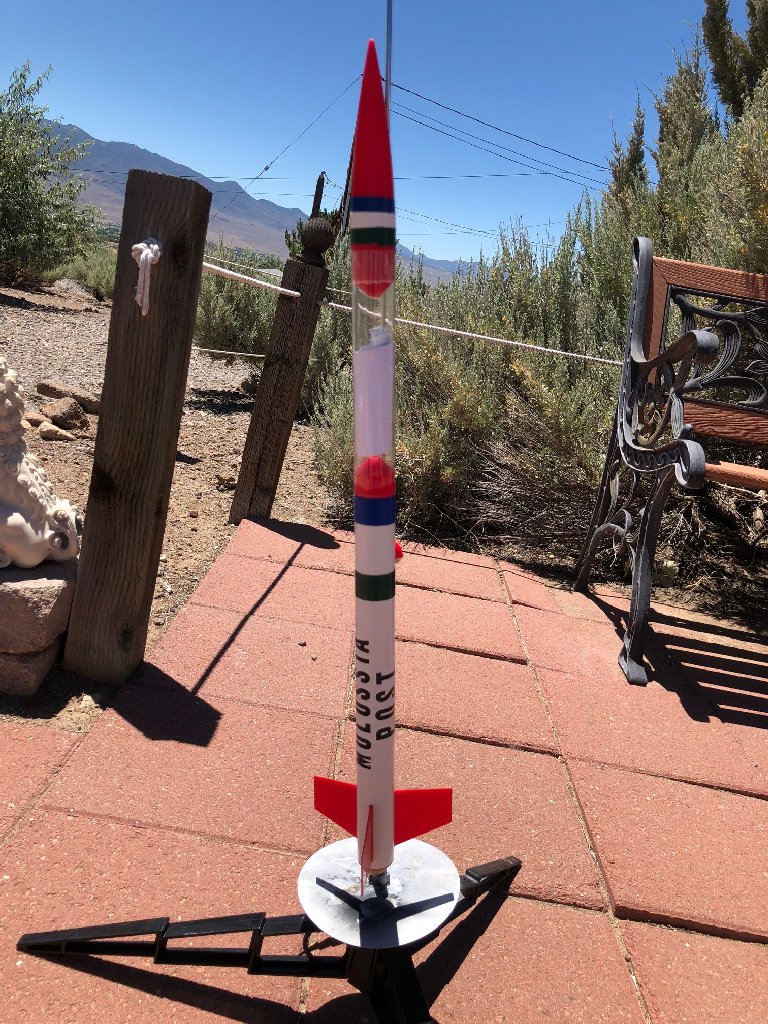
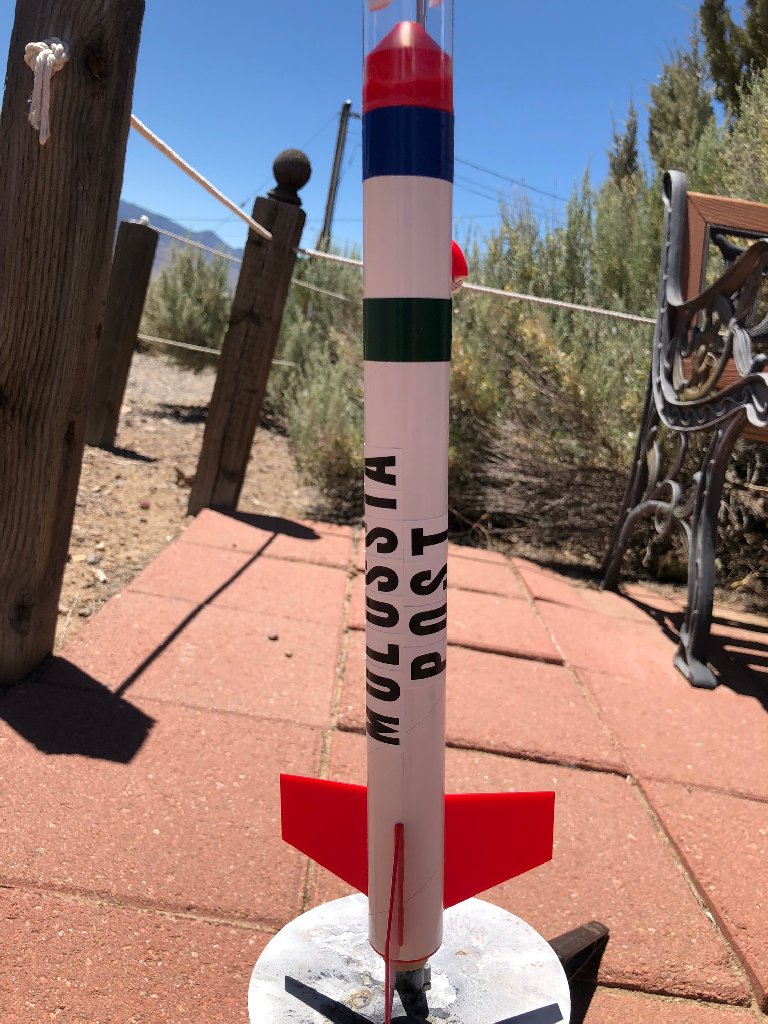
On Sunday 27 April 2008 XXXI, the Molossian Air and Space Agency launched it's latest project, the "Endeavour" Tandem Rocket Project. The purpose of this mission was launch the Oracle Rocket and immediately launch another rocket afterward, in hopes that Oracle would film the second rocket as it took to the skies. An auspicious goal, and unfortunately one that was complicated nearly every step of the way.
As preparations were under way, the first problem arose: the software that is used to download video from the Oracle is not compatible with Windows Vista, and Vista is the operating system of the new laptop computer used by the Agency. Because the Oracle only takes one video per launch, that video must be downloaded before a second can be made. Without the portability of the Agency's laptop, plans had to be rewritten, moving the launch from its usual venue, Misfit Flats, 10 Imperial Nortons from Molossia, to a nearby hilltop less than one IM from Molossia. Thus, after each launch, the launch crew would have to return to Molossia to download the video from the flight, before returning from the launch site to start all over.
With that plan in place, the launch site was set up, nearer to Molossia. The chase rocket was to be the new "Mustang", built just for the Endeavour Project, and painted in the colors of the Molossian Flag. At 9:40 AM MST, the Oracle and the Mustang flew aloft in a perfect launch on a lovely spring day. Both rockets landed near the launch site as planned, and the crew returned with the Oracle to Molossia, to download the video. Only then was it discovered that the power to the camera had been shut off, probably during landing, and the video was lost. The crew returned to the launch site and launched again, again without complications. Upon recovering the Oracle, however, the camera was inadvertently triggered, erasing the video. Frustrated, the crew retreated to Molossia.
Two hours later tempers had cooled, and the crew returned to the launch site. The next two launches went flawlessly, and video was successfully recovered from both. However, when the film was viewed, it was discovered that the launch of the Mustang is barely visible on the first video taken by the Oracle, and not visible at all on the second. Thus, after all the effort and problems, the "Endeavour" project was largely a failure. Nevertheless, the decision was made to turn the existing video into a short movie anyway. The project was retroactively named "Endeavour", both to reflect the discovery theme ("Endeavour" being the name of Captain Cook's vessel), and to reflect the sheer effort that has gone into this project. |
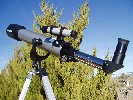 |
THE NEW "RUFUS T. FIREFLY MEMORIAL NATIONAL OBSERVATORY"
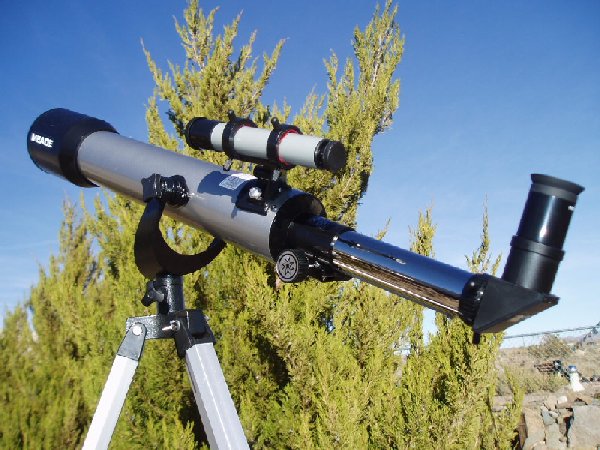
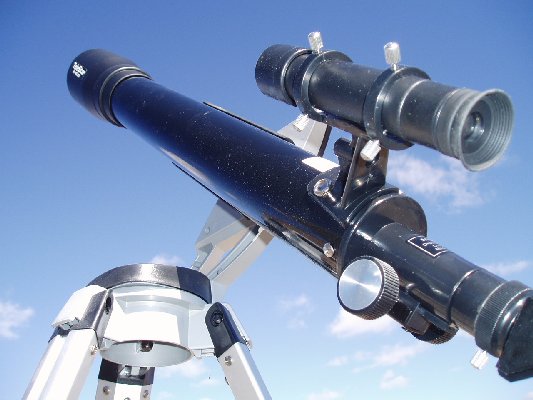
Our new National Observatory takes our exploration of the heavens to a new level. It was established in October 2007 XXX. This telescope replaces the original National Observatory which was retired in 2005 XXVIII. |
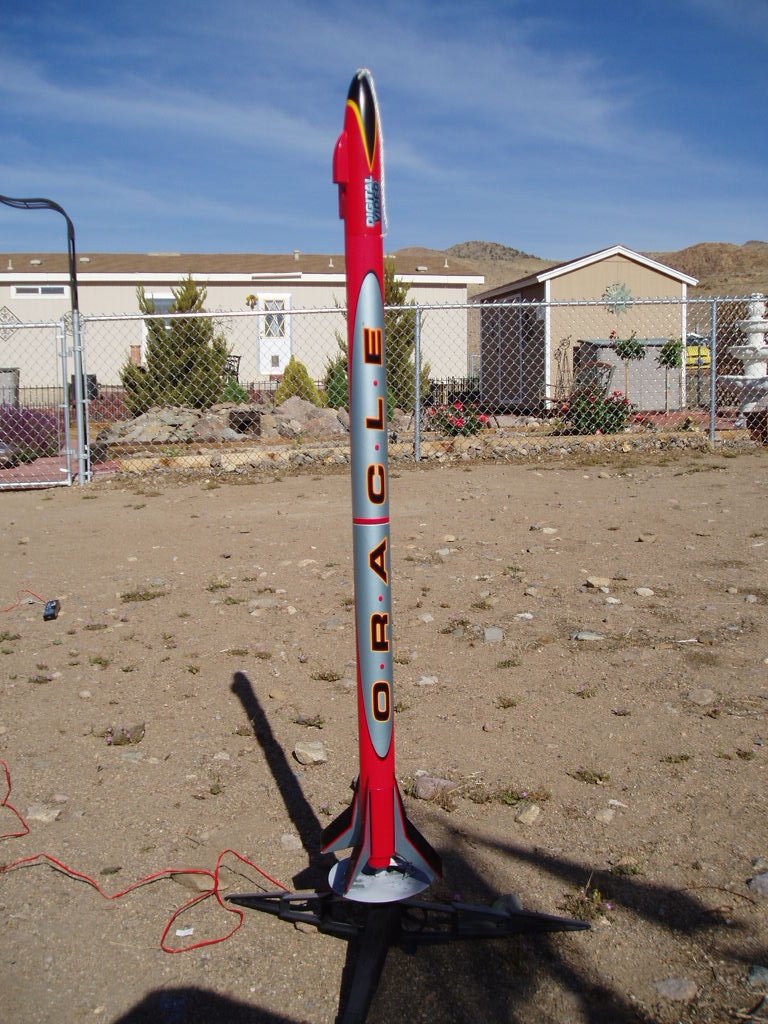
The "Oracle"
Click here for the movie of the "Oracle's" Flight
Click here for the movie of the "Oracle's" Second Flight
|
FLIGHT OF THE "ORACLE"
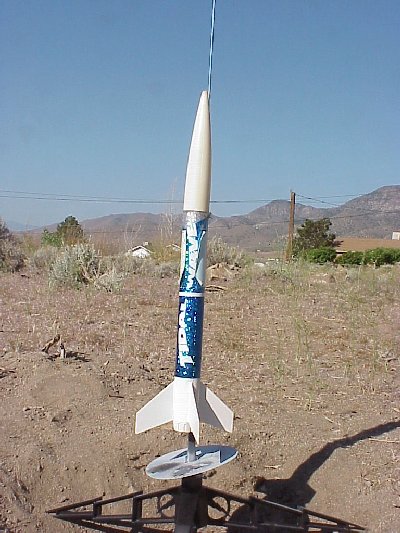
On 9 June 2007 XXX our newest rocket rose aloft. The "Oracle" shot skyward at 8:00 AM Molossian Standard Time. The Oracle is the latest stage in our continued aerial explorations, and is the successor to the Astrocam, our last rocket. Equipped with a small video camera, Oracle is able to take movies while aloft. This project, eagerly anticipated, proved to be a complete and resounding success. The Oracle was launched a total of three times, first from Norton Park, then from Republic Square and finally from near the Tower of the Winds. In each case, the rocket performed admirably, rising several hundred Nortons in the air before landing smoothly not far from each launch site. During every launch, video was taken, which produced three aerial movies of Molossia. Details of our nation can be clearly seen from above, including Norton Park, Government House and Republic Square. This marks the first successful high-altitude images of our nation, images that are much higher and clearer than those taken by the "Moa" (see below). This is another great triumph for our air and space program, and we eagerly look forward to future missions for this mighty rocket.
On 21 October 2007 XXX, the Oracle again rose aloft, this time above "Misfit Flats", a dry lake bed not far from the Molossian Home Territories. Misfit Flats is famous for being a filming location for the movie, "The Misfits", starring Clark Gable and Marilyn Monroe. It was also their last movie. From this storied location, the Oracle lifted off at 9:00 AM MST. A total of three launches were accomplished, in spite of technical difficulties. A computer power failure interrupted the process of downloading the first launch video from the rocket, and necessitated a run back to Molossia to remedy the situation. That fixed, the second launch went well although the Second Stage of the rocket separated in two on the way down, requiring on-the-spot repairs. The final launch proved to be a near disaster, as the second stage came apart again, this time hampering the deployment of the parachute. The nose cone crashed to earth without the parachute braking its progress. However, the Oracle is a tough rocket, and the camera survived. The rocket itself is wholly salvageable, and will fly again. Video was taken successfully from these three launches and can be seen in the movie to the left. The Oracle will fly again!
|

The "Moa"
Click here for the movie of the "Moa's" Flight
|
FLIGHT OF THE "MOA"
On 7 May 2007 XXX our latest aerial survey effort took to the skies. The "Moa" rose aloft at 9:00 AM Molossian Standard Time. As was the case with the failed Hypérion Balloon project, the Moa's purpose was to rise high above Molossia and take aerial photos of our nation. Unlike the Hypérion, however, the Moa performed quite well on its first flight, and was subsequently re-launched several more times, to take other aerial shots of Molossia. The film taken is still somewhat unrefined and tends to jump around a bit due to the wind. Nevertheless, this is the first real success we have had at taking aerial photos of Molossia, and this project is thus considered resounding triumph for Molossia's air and space program. The Moa will fly again on future missions!
|
|
MOLOSSIAN ROCK EXAMINED BY NASA
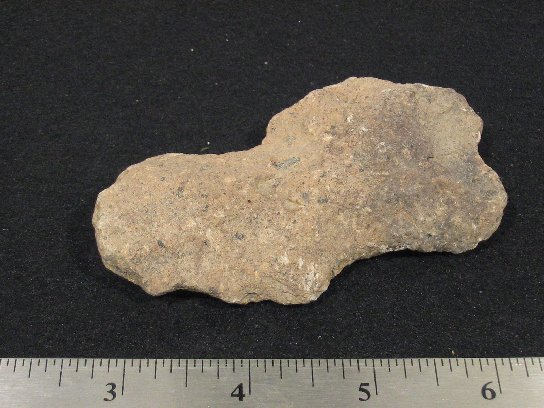
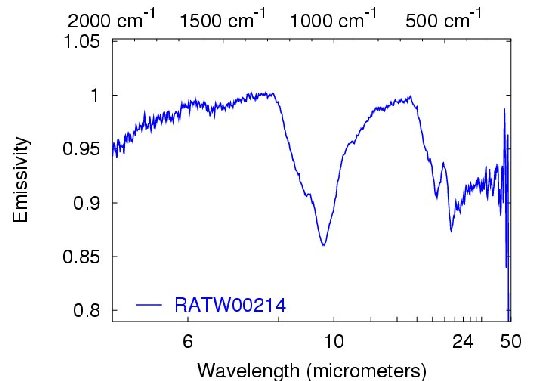
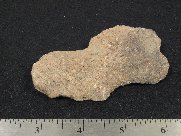
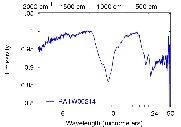
A small piece of Molossia has been sent to NASA for examination, as a part of NASA's "Rock Around the World" program. The rock was chosen by Molossian citizen and occasional Benverian, Carson Baugh. It is hoped that this will broaden our knowledge of the Molossian geologic makeup, and enhance our study and awareness of the world around us. The rock and results of NASA's study can be seen to the left. Although we are not sure exactly what this spectrum respresents, we believe it to mean that the rock is basalt, which is volcanic in nature. It is well known that the area of the Great Basin has volcanic origins, so this hypothesis is not unlikely.
|
MESSAGE TO THE MOON
The quest to go to space knows no bounds on Earth, now that China and Europe have entered the world of space-faring nations. Molossia is no different, but our goals are not quite as lofty. In addition to our small sub-orbital space program, today we have made the next step, to leave this planet in electronic form. Using the services of TransOrbital, our government will send a message into space, aboard a small capsule, the Trailblazer 2001. This capsule will orbit the moon and take pictures, before crashing into the lunar surface, carrying our message (and many others) to the moon. We look forward to this project taking place in the near future.
This is the text of the message that will be sent:
"Greetings from the Republic of Molossia, the world's smallest sovereign republic. We send this message on behalf of all Molossians, and the small nations of Earth. We offer our hopes for peace and a bright future for all mankind."
His Excellency President Kevin Baugh,
The Republic of Molossia
|

|
"HYPÉRION" BALLOON FLIGHT
The "Hypérion" Balloon Flight and Aerial Survey took place on February 14th, 2004 XXVII. The intention of this flight was to rise high above Molossia and take aerial photos of our nation. Previous efforts to accomplish this goal using the AstroCam rocket have not been successful. This project was much heralded, with a great chance of success. Unfortunately, this project did not "rise to the occasion", so to speak. In spite of attaching over 40 balloons, the camera failed to rise more than 34 Nortons (7 m / 20 ft) in the air. In addition, the ever-present Molossian wind contributed to the project's failure, dragging the balloon into the few trees we have in our country. In spite of this setback, we continue to look skyward, in our quest to explore the heavens.
|
 |
"ASTROCAM"
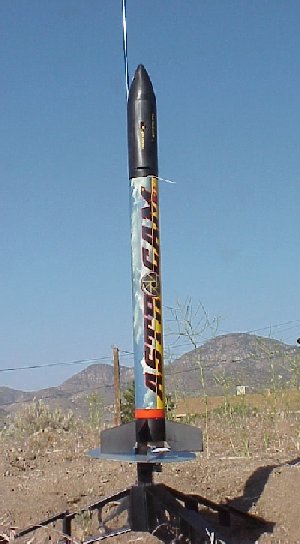
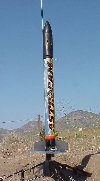
"Astrocam" is the latest addition to our small rocket fleet. Where Tidal Wave was our first step toward the skies, Astrocam is the logical second step in our continued aerial explorations. Equipped with a camera, Astrocam is able to take pictures while aloft. This project, though eagerly awaited, proved to be more difficult than planned. The Astrocam proved to have design flaws that made it nose heavy and prone to problems, including separation of the parachute from the nose cone, and burning through the shock cord, causing the two stages to separate and crash down separately. Only one photograph was successfully taken, and that proved not only to be blurry, but it also proved to be of land over the border in the USA, and therefore of no use. We continue to seek the heavens in every way possible.
Click the button to see a movie of Astrocam's first launch! (430KB mpg)
|
 |
"RUFUS T. FIREFLY MEMORIAL NATIONAL OBSERVATORY"
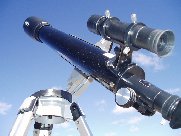
Our National Observatory takes our exploration of the heavens to a new level. It was established in August 2003 XXVI, during the perigee of the planet Mars. Its most noted role has been the detailed scrutiny of the lunar surface, a study which has extensively preoccupied Molossian astronomers. This telescope was retired in 2005 XXVIII. |
 |
"TIDAL WAVE"
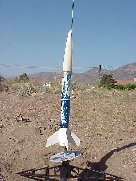
"Tidal Wave" was the first rocket launched by our nation. For over three years, this rocket was the workhorse of our space program. Over countless missions, Tidal Wave performed reliably and ably, logging many hours aloft in our quest to explore the heavens. Finally, in 2002 XXV, the aging rocket malfunctioned and was retired. |
Return to the Republic of Molossia Main Page.
|